1833 The Hunchback of Notre Dame: Victor Hugo

1833 The Hunchback of Notre Dame: Victor Hugo


Although we know this book as The Hunchback of Notre Dame, it was first published in France as Notre Dame de Paris in 1831. The more familiar version of the title was coined by the translator, Frederic Shoberl, who provided the text for the first English edition of 1833.

In conceiving the novel, Victor Hugo was mainly concerned with the conservation of important Gothic architecture in France, using the example of the cathedral of Notre Dame de Paris, which was in a rather poor state of repair by 1830. However, the drama and pathos of the infatuation of the disfigured dwarf, Quasimodo, with the beautiful and seductive gypsy, Esmeralda captured the imagination of readers in both French and English.

Many other English translations have followed, and several film and stage adaptations have also been devised. The famous film version of 1939, with Charles Laughton’s immortal performance as Quasimodo to Maureen O’Hara’s Esmeralda is the image of the hunchback that most people recognise.

The first French edition published by Gosselin in 2 volumes in Paris or the first English edition published as a single volume by Bentley in London in 1833 are both highly desirable.

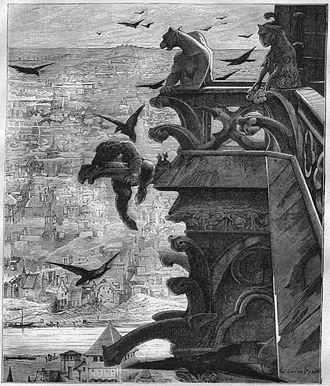
The most memorable image of the hunchback from a book is probably the one below, which is neither from The Hunchback of Notre Dame nor from Notre Dame de Paris, but is from Victor Hugo et son temps, by Alfred Barbou,  published by G. Charpentier in Paris in 1881.

Return to the Gothic Novel list

1817 Northanger Abbey: Jane Austen

1817 Northanger Abbey: Jane Austen


Northanger Abbey and Persuasionwere both published posthumously in four volumes in December 1817, following the death of Jane Austen in July 1817. Whereas Persuasion was the last manuscript that Jane Austen completed before she died, Northanger Abbey was a result of her reworking of an earlier manuscript called initially Susan and then Catherine. 

The copyright of Susan was sold to a bookseller and publisher, Crosby, in 1803 for £10.  Susan was never published, and the family eventually repurchased the copyright from Crosby in 1816, after the successful publication of Sense and Sensibility, Pride and Prejudice,Mansfield Park and Emma, for the same sum of £10. Crosby was unaware of the identity of the author! 

The story was revised and renamed Catherine by the author, as a successful novel called Susan had recently been published. The title Northanger Abbeyis thought to have been chosen by Jane Austen’s brother Henry after the author’s death.

Northanger Abbey is a wonderful satire of Gothic novels, which allows Austen to poke gentle fun at the genre, through the words, thoughts and actions of the naïve heroine, Catherine Morland. Although Pride and Prejudice and Emma are generally the most popular of the novels of Jane Austen, Northanger Abbey is my favourite because of all the discussion of literature, especially Gothic fiction, that it contains. 

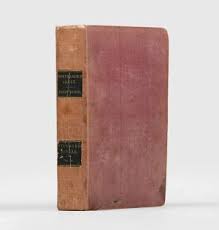
The second edition, published by Bentley in 1833 is the first illustrated edition, first single volume edition and the first English edition to acknowledge Jane Austen as the author on the title page. There was a gap of 15 years between the publication of the first edition in 1817 and the second edition. Northanger Abbey has not been out of print since.

  The original publisher’s binding and the frontispiece are shown below. The frontispiece shows Henry Tilney finding Catherine Morland, as she is snooping around Northanger Abbey, looking for evidence of a ghastly, imagined, (Gothic) fate for Henry’s mother.


Return to the Gothic Novel list


1818 Frankenstein: Mary Shelley

1818 Frankenstein: Mary Shelley


2018 was the 200th anniversary of the publication of Mary Shelley’s landmark novel Frankenstein; or, The Modern Prometheus, to give it the full title, which had been conceived and started at the famous Villa Diodati in June 1816, when Mary Shelley was 18 years old.

Frankenstein was the result of a competitive game involving Mary and Percy Shelley, Lord Byron and John Polidori, Bryon’s friend and doctor, after they had been reading German Gothic stories during a few days of rain by Lake Geneva.
The first edition was published anonymously in three volumes on 1st January 1818 with a preface written by Percy Shelley. A second edition appeared in two volumes in August 1822, which named Mary Shelley as the author on the title page. The first single volume edition appeared in October 1831, this time with a new preface written by Mary Shelley, and with the text significantly revised by the author. Most subsequent editions used the text from this revised edition of 1831.

In many ways all three of these editions are highly desirable, although the first edition is now very scarce (only 500 copies were printed) and very expensive. The 1831 single volume edition, published by Colburn and Bentley, is very attractive to collectors as it has Mary Shelley’s preface together with an iconic frontispiece designed by Theodor von Holst. This is the picture shown below.

Frankenstein has been reprinted many times over the last 200 years and has been the inspiration for many film, television and stage portrayals of the monster, most famously by Boris Karloff in the film which was released in 1931, 100 years after the publication of the Colburn and Bentley edition.

Return to the Gothic Novel list

1796 The Monk: M G Lewis

1796 The Monk: M G Lewis


The Monkby Matthew Gregory Lewis, for ever after known as ‘Monk’ Lewis, was a notorious book from the time of its first publication. The story revolves around the relationship between the monk of the title, Ambrosio, and the woman, Matilda who both loves him and tricks him into a sexual relationship with her, in what was described at the time as “a lewd and blasphemous book.”

The first edition is dated 1796 but is thought by some commentators to be published, in three volumes, in late 1795, when Lewis was only 19 years old. In that edition, the author is only identified by the initials M.G.L. In late 1796, after initially favourable reviews, second and third editions were published which identified the author as M.G. Lewis Esq. M.P., for Lewis had been elected to parliament at the age of 20 in 1796.

In 1797, Samuel Taylor Coleridge published a highly critical review, which condemned the book as one likely to corrupt the reader. In response to this, Lewis edited the book, removing the equivalent of 17 pages of his most extreme writing for the fourth edition published in 1798. Most 19thcentury editions were further expurgated by other hands.

Any one of the first three editions of 1796 are desirable to the collector. The title page of the first volume of my second edition of October 1796 is shown below.

Return to the Gothic Novel list

1794 The Mysteries of Udolpho: Anne Radcliffe

1794 The Mysteries of Udolpho: Anne Radcliffe


The Mysteries of Udolpho, like Castle of Wolfenbach, is today probably best known because of its appearance in discussions on Gothic novels in Jane Austen’s Northanger Abbey.

Mrs Anne Radcliffe (1764-1823) was a very successful writer of Gothic novels in the last decade of the 18th century. She has been thought to be the highest paid author of the 1790s. In 1794, She received £500 for the copyright of The Mysteries of Udolpho; nearly twenty years later, Jane Austen received only £110 for the copyright of Pride and Prejudice

Anne Radcliffe made the Gothic novel widely acceptable through her habit of presenting seemingly supernatural events, before providing rational explanations for those events.

First editions of The Mysteries of Udolpho, which was published in 4 volumes in 1794, can still be found by the fastidious collector. Here is the title page of my copy of the first American edition, which was printed by Samuel Etheridge of Boston in three volumes in 1795. Note the mis-spelling of the author’s name.


 The Mysteries of Udolpho was very popular in its day and was republished many times.


Return to the Gothic Novel list

1793 Castle of Wolfenbach: Emily Parsons

1793 Castle of Wolfenbach: Emily Parsons


Castle of Wolfenbach is one of the “Seven Horrid Novels” famously listed by Isabella Thorpe in Northanger Abbey by Jane Austen. For many years, these novels were thought to be inventions of Jane Austen, but research, published by Michael Sadleir in 1912, revealed that the “Seven Horrid Novels” were all real books.

Emily Parsons (1739 -1811) had the distinction of being the author of two of the horrid novels; Castle of Wolfenbach and The Mysterious Warning. In all, Emily Parsons had more than 20 novels published between 1790 and 1807. She was a devout Protestant, whose writings betrayed a deep distrust of France and the Roman Catholic church.

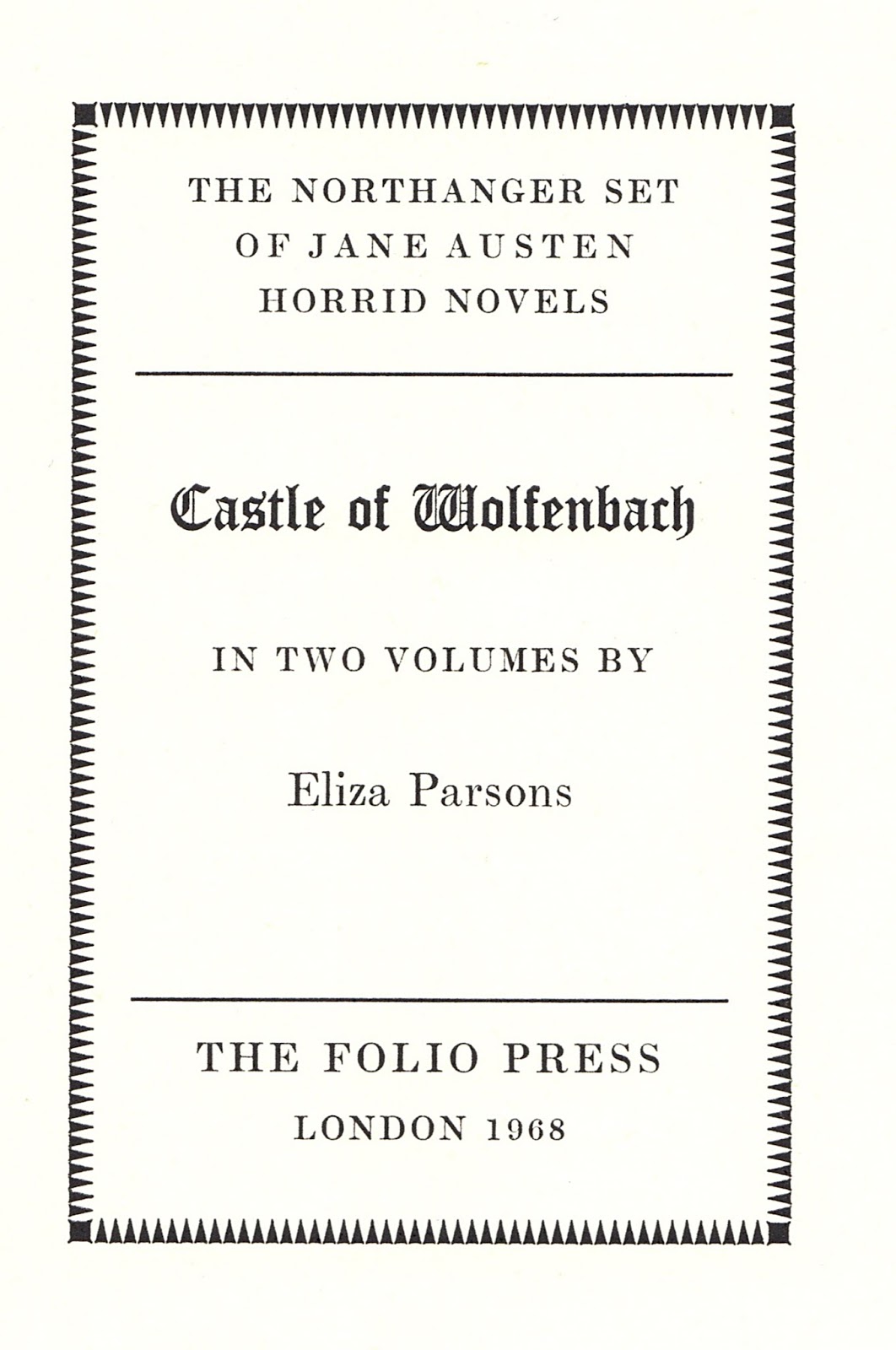
Castle of Wolfenbach was first published in 1793 by William Lane in 2 volumes. It then seems to have been completely out of print until all the seven horrid novels were re-issued by The Folio Press (Folio Society) in 1968. The only possible collectible copy is that Folio Press edition shown here. 

This edition of Castle of Wolfenbach , like the first edition, is not illustrated but has an excellent introduction written by Professor Devendra P. Varma, a Canadian expert in Gothic literature, who has also edited a fine facsimile edition of Varney the Vampire, the famous “Penny Dreadful” Gothic serial.

Return to the Gothic Novel list


1786 Vathek: William Beckford

1786 Vathek: William Beckford


Vathekwas an early gothic novel with an Arabian setting, which capitalised on a European interest in all things oriental. It was the story of the excesses of a sensual Caliph called Vathek, who sold his soul to the devil in his thirst for knowledge, power and pleasure. The story is told by a narrator who relates the series of events of the story with a constantly forward-moving momentum, with little room for reflection or character development. The story involves an evil jinn called the Giaour, who was also the subject of a Gothic poem by Byron.

William Beckford (1760-1844) was an English novelist, art collector, politician and  travel writer. He was said to be one of the richest men in England. He did not seem to spend his wealth wisely.

William Beckford was perhaps best known for building an expensive Gothic folly, Fonthill Abbey, which collapsed spectacularly in 1825, and Lansdown Tower, now known as Beckford’s Tower, which is still standing in Bath.

The book was originally written in 1782 in French by Beckford, who was an avid traveller. The book was first published in England in 1786, in the form of a translation from the French by an English churchman, and the book was not attributed to Beckford for several editions.

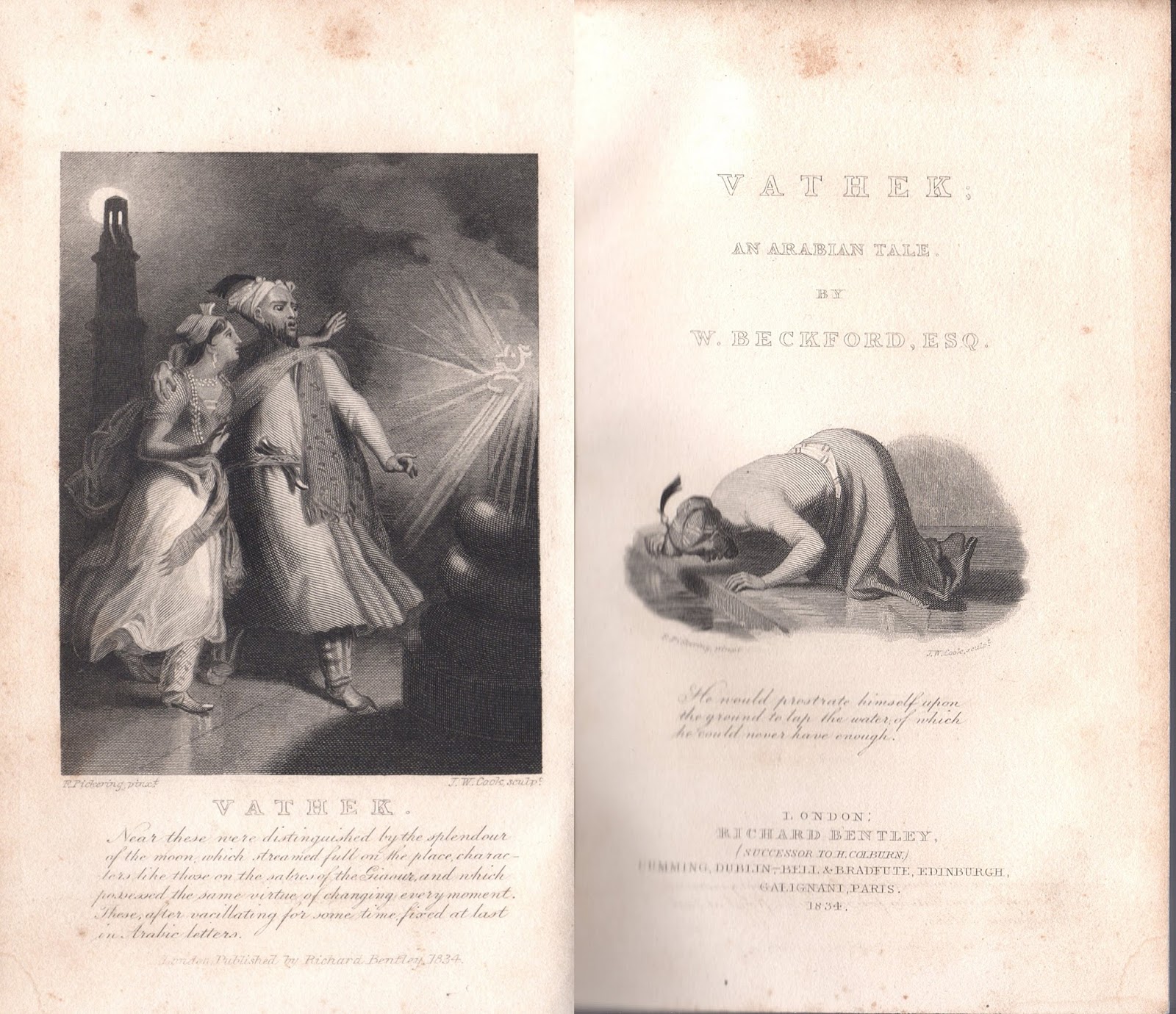
The desirable edition of Vathek that I show here is the reprint in Bentley’s Standard Novels of 1834, which has pleasingly romantic oriental illustrations as the frontispiece and on the engraved title page.

Return to the Gothic Novel list

1778 The Old English Baron: Clara Reeve

1778 The Old English Baron: Clara Reeve

This story was first published in 1777 under the title The Champion of Virtue. It was republished the next year as The Old English Baron, following revisions by the author’s friend, Mrs Bridgen, who was the daughter of the author Samuel Richardson. A dedication thanking Mrs Bridgen, dated Sept. 1, 1780, was printed in many subsequent editions. The second paragraph of the author’s preface states:

 “The Story is the literary offspring of The Castle of Otranto, written upon the same plan…”  

The book was very popular in its day and many editions were published, although Clara Reeve was not generally well regarded. Sir Walter Scott famously said of her dialogue that it was “sometimes tense and tedious, not to say mean and tiresome.”

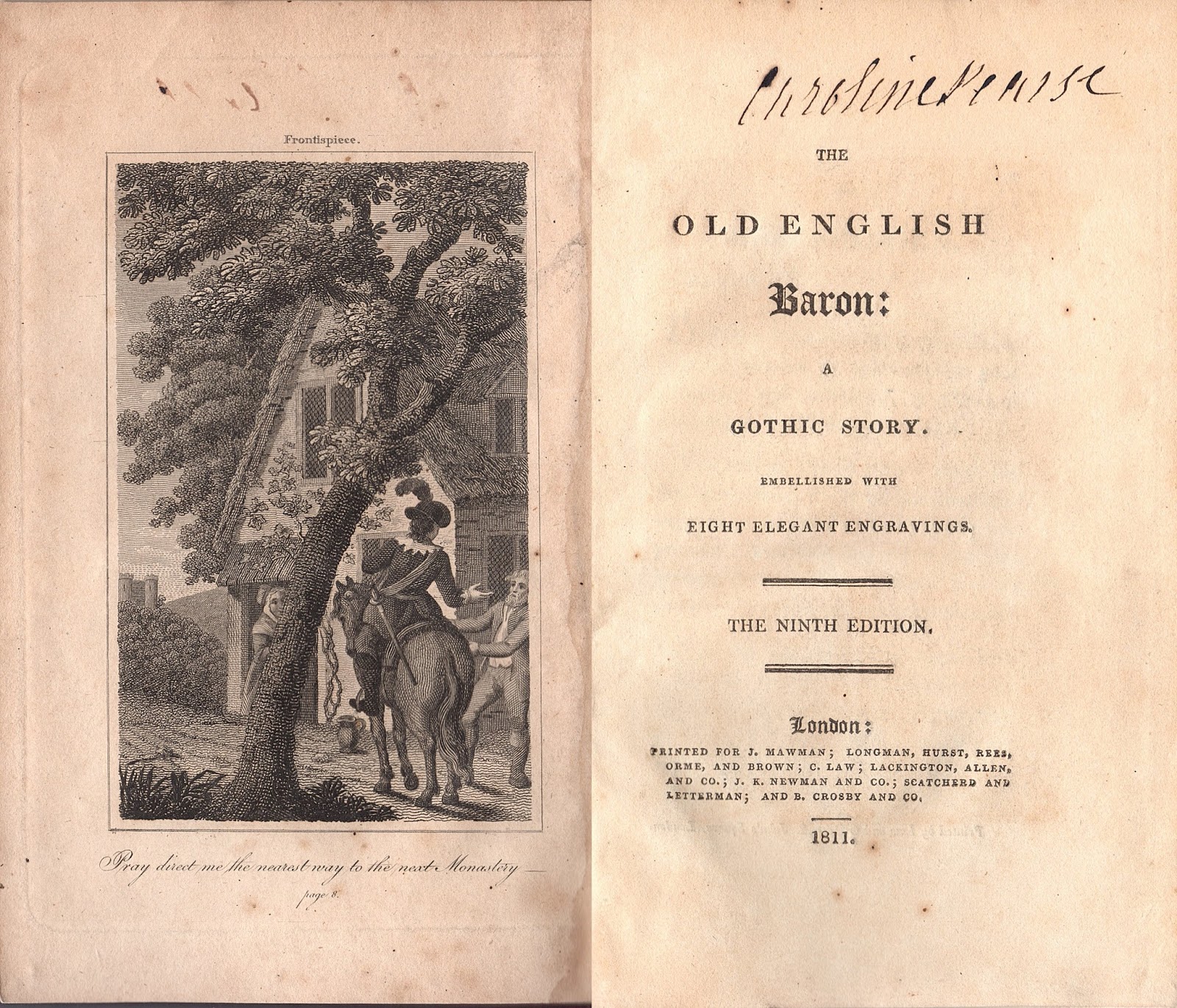
The ninth edition, printed in London by Law and Gilbert in 1811 for a group of six London booksellers is my highly desirable edition, as it is “Embellished with eight elegant engravings”. This edition also contains the original preface by Clara Reeve and her dedication to Mrs Bridgen.

Old English Baron frontis title


1764 The Castle of Otranto: Horace Walpole

1764 The Castle of Otranto: Horace Walpole

The Castle of Otranto is generally recognised as the first Gothic novel. 


The first edition was published anonymously in 1764, and purported to be based on a sixteenth century manuscript from Naples. It was quickly followed by a second edition, published by William Bathoe and Thomas Lowndes in London in 1765 which contained a preface by the author, acknowledging his authorship and explaining the genesis of the book. It starts “ The favourable manner in which this little piece has been received by the public, calls upon the author to explain the grounds on which he composed it.” Sadly for Walpole, the critics, once the authorship had been revealed, changed their minds and dismissed the book as romantic fiction.

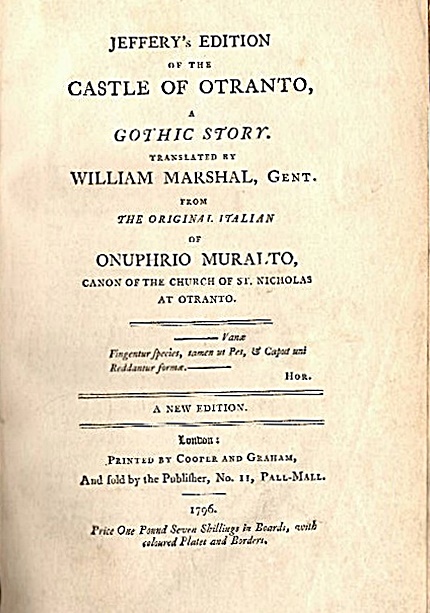
I particularly like the Jeffrey’s edition of 1796, which is the first edition to contain coloured illustrations. An edition with black and white illustrations was also published in that year by Jeffrey. The coloured picture above is the frontispiece from the Jeffrey edition. 

My copy of the Jeffrey edition of 1786 of The Castle of Otranto with the coloured illustrations is on display in the Dark Imaginings exhibition at the University of Melbourne. The title page is shown below.

Title page from the 1796 edition of The Castle of Otranto


My Twenty-one Best Gothic Novels

My Twenty-one Best Gothic Novels


The Gothic novel has a key place in the history of English literature from the mid 18th century until today. Below is a list of my twenty-one most desirable examples of Gothic Literature from a book collector’s perspective. In this article, I will briefly discuss elements of the publication history of each of the twenty-one works that I have chosen. I will also nominate which edition I would select as the most desirable to have in my Gothic Library. Although to most book collectors, the first edition of any book is often the most desirable, that is not necessarily the case, and I will try to explain here why I think each “most desirable” edition that I have nominated has its special appeal. The choice is of course entirely personal.

The books are presented here in order of first publication, and I have not attempted to put them in any order which reflects literary merit or relative desirability as a collectible book. I do have copies of all the books nominated here in my personal collection, although some of the most desirable editions remain on my “wants” list. One or two of the most desirable editions I expect never to find! Click on a link to find out more about each book.


That completes my list of 21 collectible Gothic novels. I wish you luck in trying to find them all.

Chris Browne February 2018