In the autumn of 1939, Chiang Yee published his third Silent Traveller book with Country Life. It is a unique book in the series as it deals with a particular time more than a particular place. In this book, Chiang Yee describes his experiences just before and immediately following the British declaration of war with Germany on 3rd September 1939. The book could easily have been called “The Silent Traveller in the Phony War“, since he describes events in and around London as the British people prepare for the rigours of the 2nd World War in the autumn of 1939.
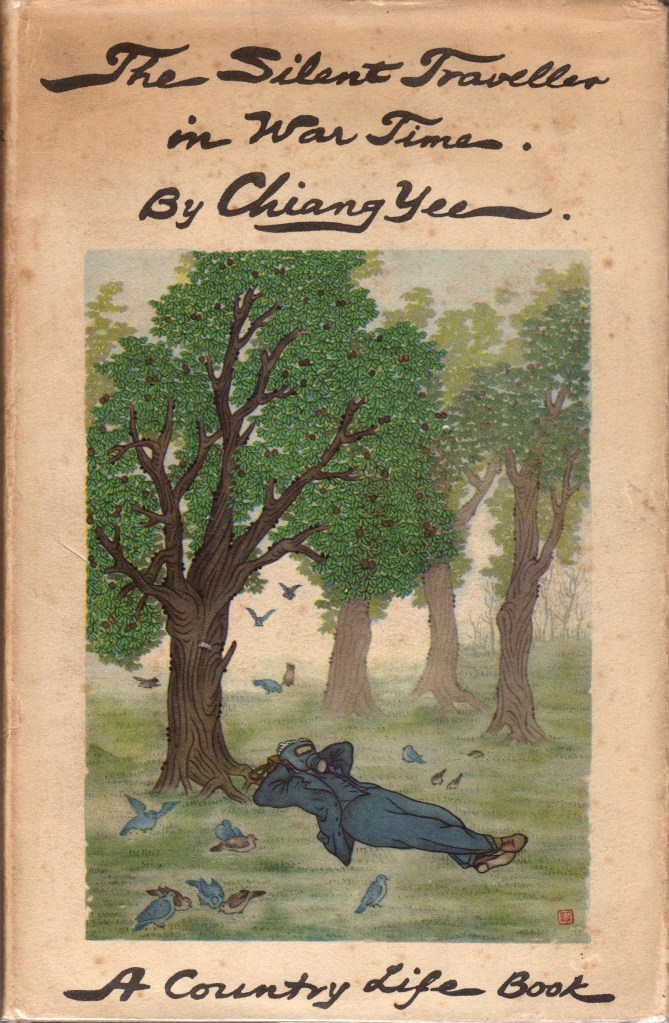
The book is dedicated “To The Moon”, as Chiang Yee observes that because of the nightly blackout, the moon is now much more visible in the night skies over London. He regards this as a small blessing, mitigating the discomforts and inconveniences of wartime in London. The dust jacket shows a painting of a man in a gas mask, surrounded by birds and asleep under the trees in a London park in daytime. It is repeated as the frontispiece to the book, and helps to create the slightly surreal feel of the whole book.
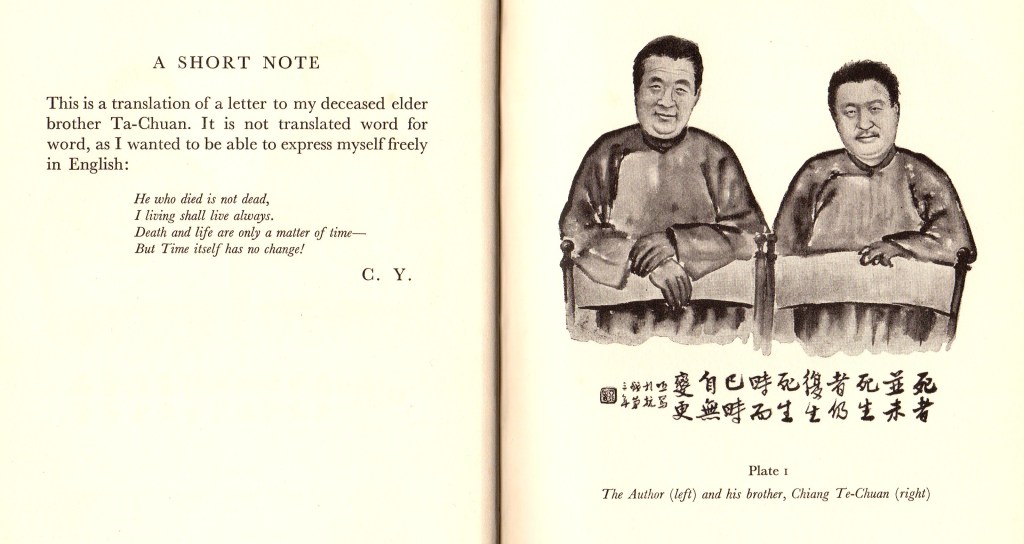
He begins the book with a short note to his late brother, Chiang Ta-Chuan, who died in China in 1938. He then includes a drawing of himself and his late brother as the first plate in the book.
Chiang Yee commences the Introduction to the book with the announcement that, since his sister in law, Fen-Sou, his late brother’s widow, has now completed the Fu-Luan ritual after 3 months of mourning her late husband, he is now, by Chinese tradition, ‘open’ to communication from his family. Accordingly, Chiang Yee structures the book as a series of letters to his dead brother telling him about the phony war period in London. He reflects that his brother had written letters from China describing some of the events that occurred following the Japanese invasion in 1937, but notes that his brother has avoided describing the “ruthlessness of the enemy in bombing open towns and killing non-combatants”; instead, he had chosen to describe “happy little incidents that you met here and there on the battlefield.” Chiang Yee therefore resolves to take a similar approach in writing his impressions of “the early days of the European war.”
He starts the book by describing an almost insane journey he decides to make, on the brink of the declaration of the war, to visit Geneva to see an exhibition of Spanish art that has been moved from the Prado Gallery in Madrid to Geneva to save it from the Spanish Civil War. He had been planning this expedition for a while, so on 24th August, the day before the announcement of the Molotov-von Ribbentrop Pact between Nazi Germany and Stalin’s Soviet Union, he boarded a train at Victoria Station heading for Folkstone and the boat-train to Paris. All his friends had advised him against leaving Britain at this time.
After dining at a Chinese restaurant in Paris, he caught the night train from Paris to Geneva, arriving early the next morning. After walking by the lakeside and admiring the mountain views, he had lunch with a Chinese friend who was a resident of Geneva at the city’s only Chinese restaurant. After an abortive attempt to secure a French visa, in case he might need one for his return trip, he duly visited the Prado exhibition the next morning for a few hours , before boarding the 1 o’clock train back to Paris, as all UK residents were now being strongly advised to return home. The next day, he caught the boat-train to Folkstone and was readmitted to Britain, getting back to London just in time to sleep in his own bed that night. His frantic four day trip had given him glimpses of the tranquility of immediate pre-war France and Switzerland, while allowing him a few hours to see the precious Spanish paintings.
Chiang Yee begins his account of the phony war period in London on Thursday 30th August when he does a favour for his friend S.I Hsiung by visiting Oxford Street, which was close to where he was working at the Wellcome Historical Medical Museum at 54a Wigmore Street, in order to buy shoes for his friend’s three children, who were due to be evacuated from London the following day. Accordingly, on 1st September he accompanied S. I. Hsiung and the three children to the school which was their rendezvous point for their evacuation, and gravely said farewell to the two boys Hsiung Tei-Wei, Hsiung Teh-Li and their little sister Hsiung Teh-Lan. The evacuation was made all the more poignant by the news that morning of the German invasion of Poland.
Later that day, Chiang Yee visited Paddington Station where he observed many tearful farewells between children boarding their trains out of London and their anxious parents. He captured the scene one of his typical line drawings.
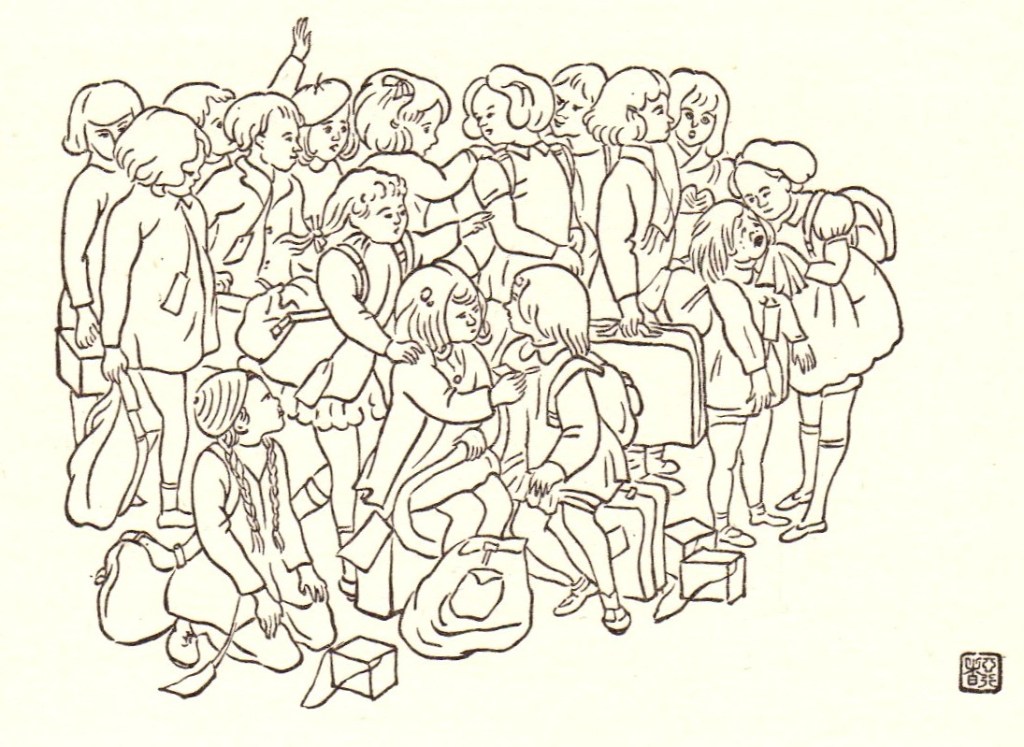
Evacuees saying their farewells at Paddington Station
Three weeks later, Chiang Yee received a joint letter from the three Hsiung children, where they told him of their new home with an elderly lady in the countryside. He wrote back to them a letter in which he included a drawing of six imagined sketches of elderly English Ladies. The children replied that their hostess resembled lady number six.
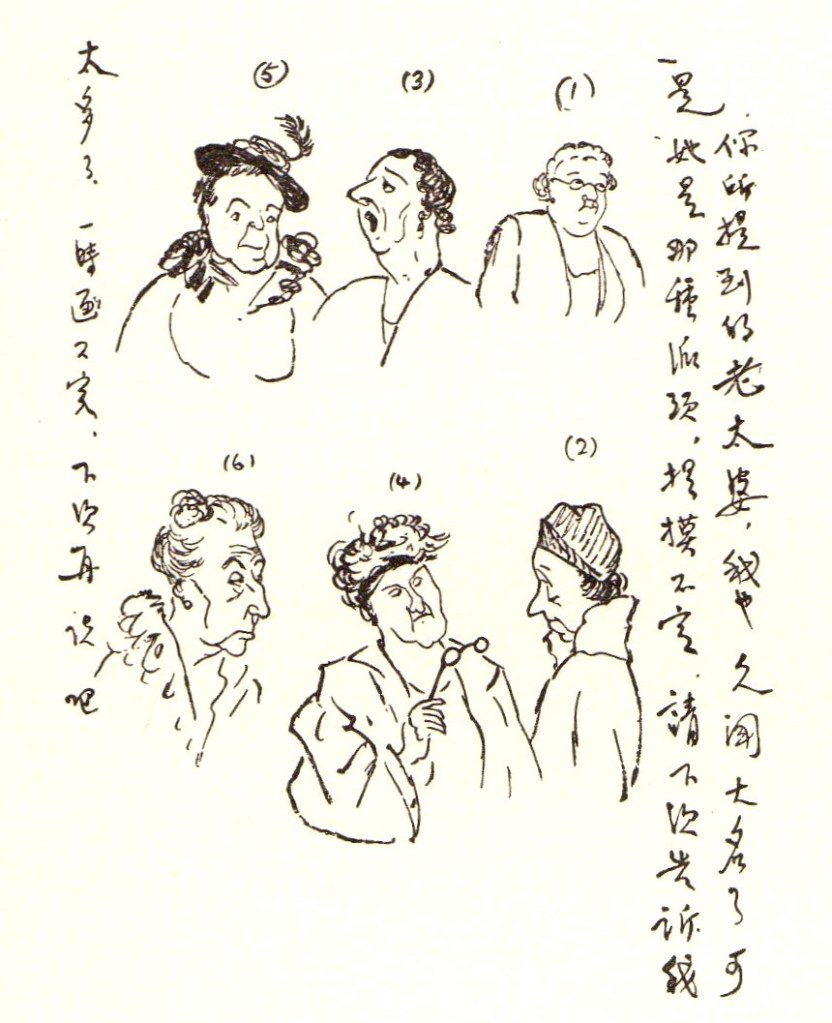
Six possible caricatures of the Hsiung children’s evacuation hostess
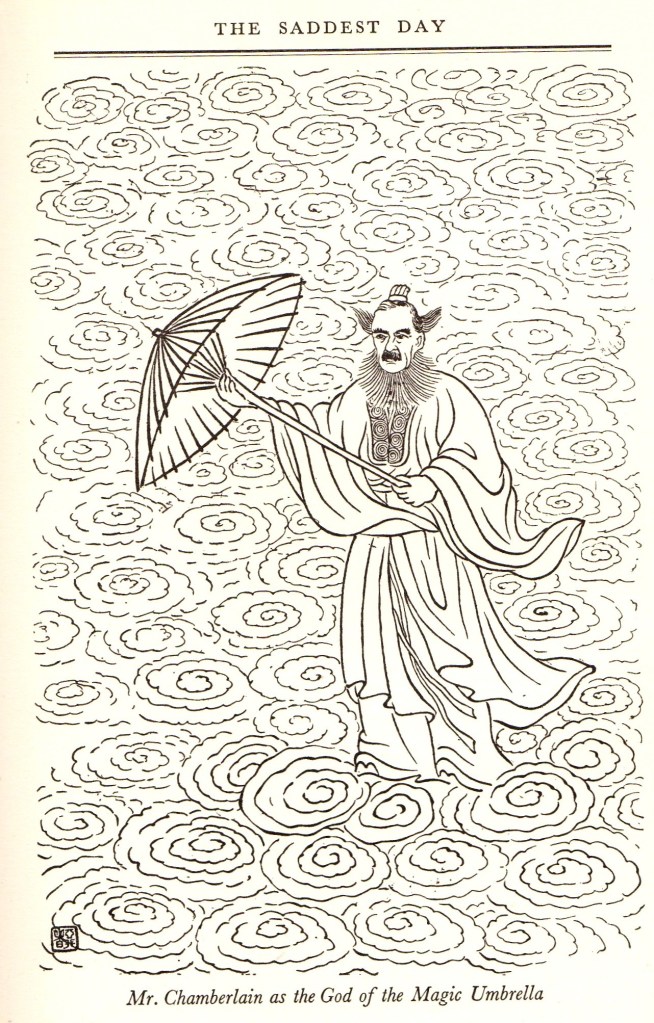
The next chapter is called “The Saddest Day” and describes Chiang Yee listening to Neville Chamberlain’s broadcast at 11am on 3rd September 1939 when he announces that Britain is now at war with Germany. Chiang Yee expresses the thought that he was even more saddened by this announcement than he had been by the onset of war in China. He then relates a daydream that he has of Mr. Chamberlain as Lu Yueh, the God of the Magic Umbrella. In Chinese tradition, when Lu Yueh kept his umbrella closed, then the world would remain at peace; when Lu Yueh opened his umbrella, plague and all other kinds of misfortune would beset the world. Chiang Yee imagines that Mr. Chamberlain must have reluctantly opened his umbrella that morning, and he illustrates the thought with a caricature of Chamberlain as Lu Yeah.
Chiang Yee follows up on his dream of Neville Chamberlain as Lu Yueh with caricatures of four other British politicians in the guise of traditional Chinese Characters. The first two are Sir Kingsley Wood as Lei-Chen Tzu, the 100th son of the 12th century King Wen, complete with wings and claws, and Mr. Leslie Hore-Belisha as Chon Yu, a famous young general. The following two are Sir John Anderson and Mr. Anthony Eden as Left Door God and Right Door God respectively.
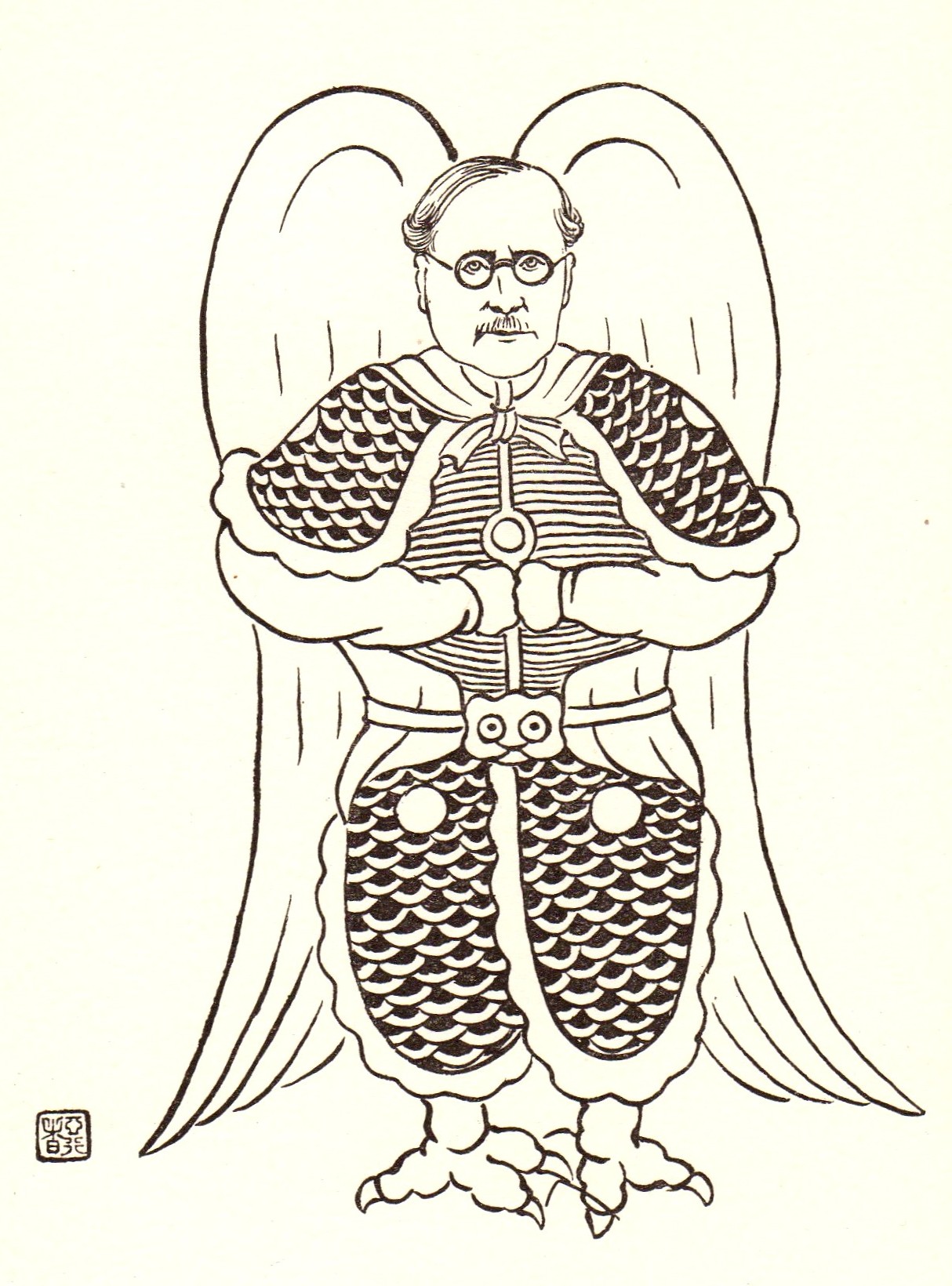
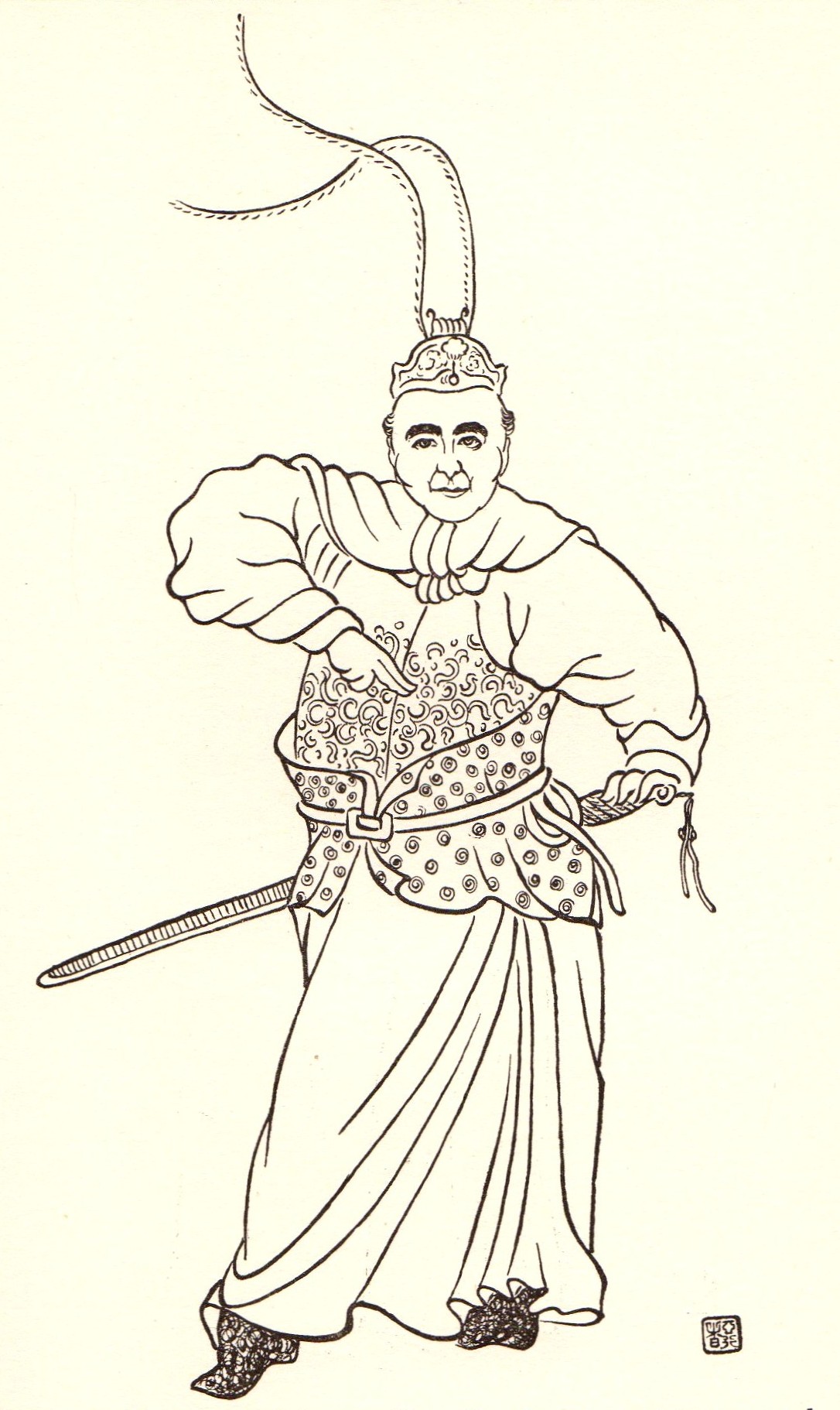
Sir Kingsley Wood and Mr. Leslie Hore-Belisha in unlikely costumes
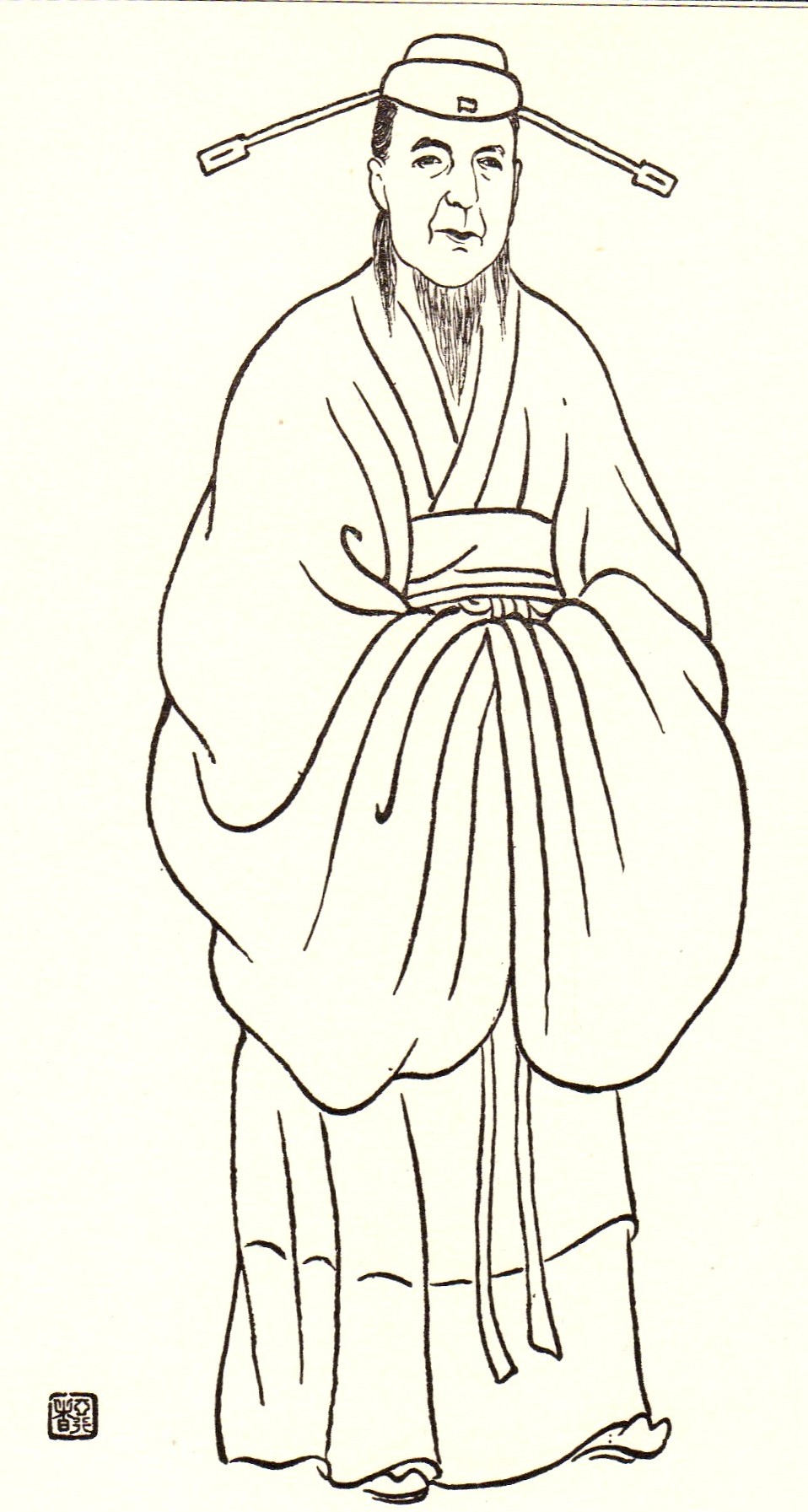
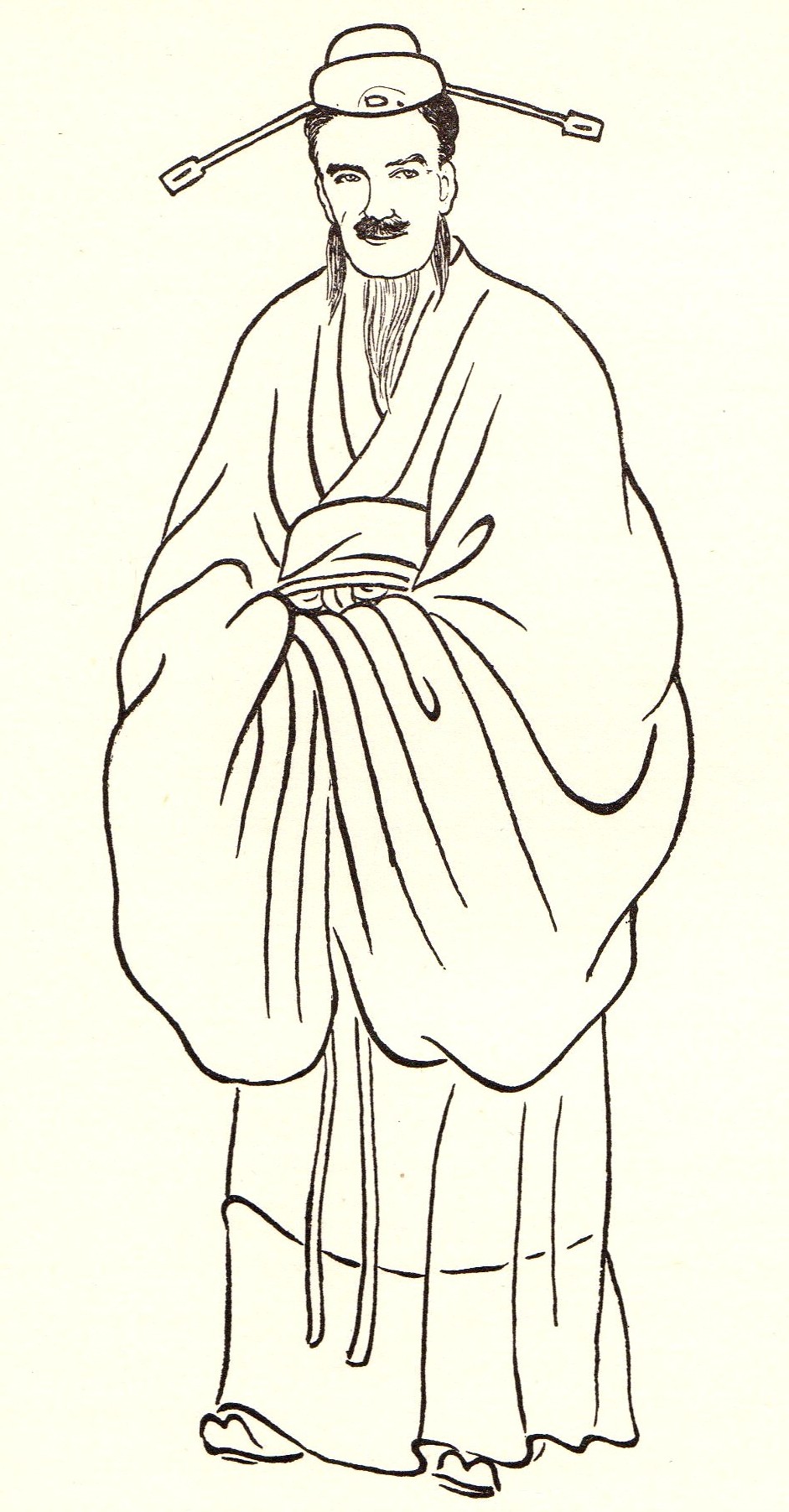
Sir John Anderson (Left Door) and Mr. Anthony Eden (Right Door)
Later in the book, Chiang Yee also gives us a different style of political caricature, drawing Winston Churchill in normal western dress, at this time in his role as First Lord of the Admiralty, nine months before he is appointed to be the Prime Minister. However, he also shows us Churchill in Chinese style as a God of War at Sea.
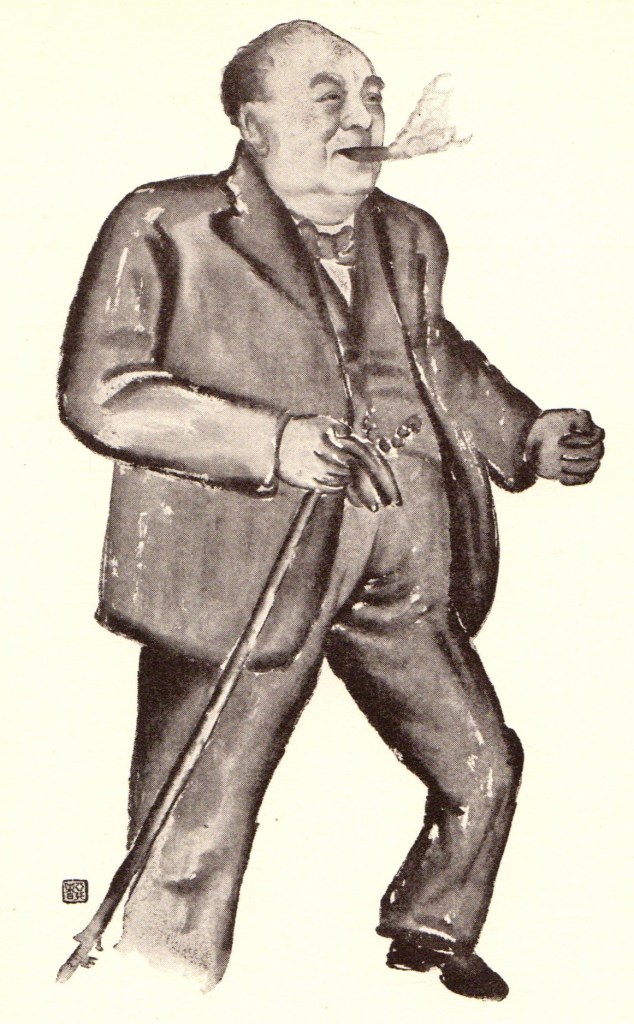
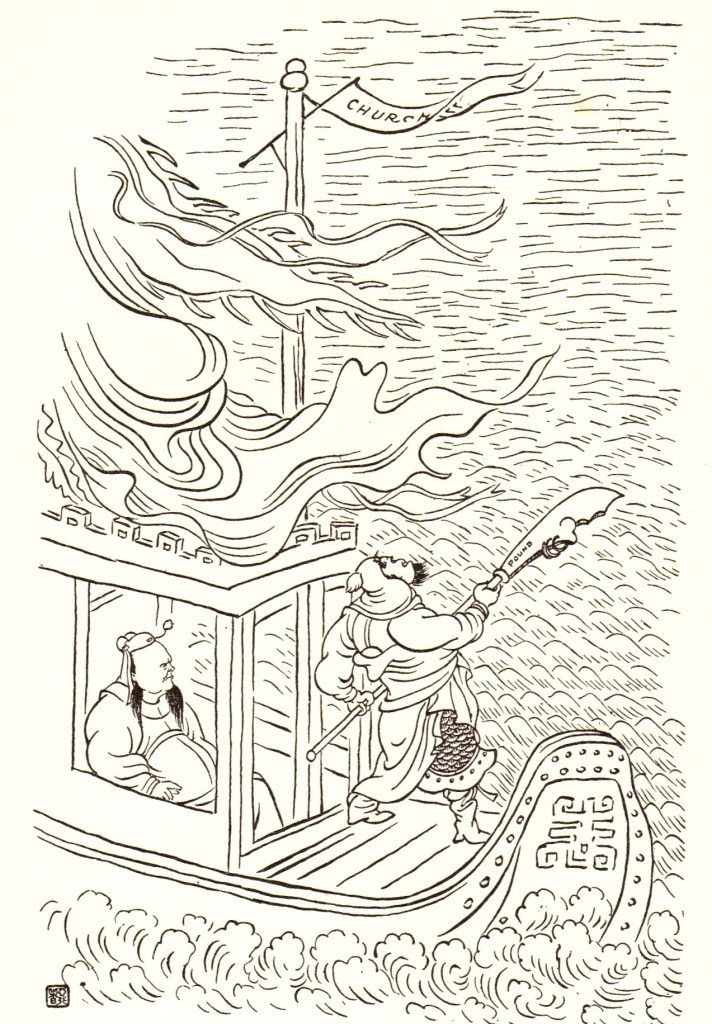
Mr. Churchill as himself and as a Chinese God of War
The most striking images of London during these early days of the war are a series of paintings that Chiang Yee created following his regular night-time walks through the city during the blackout. These include images of Trafalgar Square, Whitehall from St James’ Park and the River Thames at Chelsea. All of them show the newly-present barrage balloons and occasional glimpses of the now-visible moon.
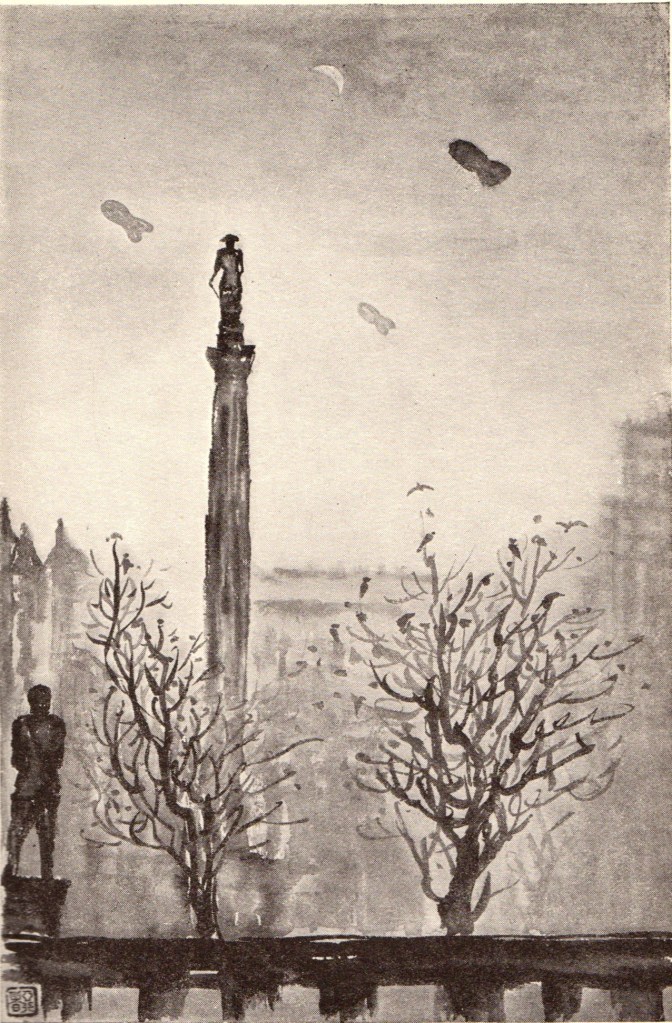
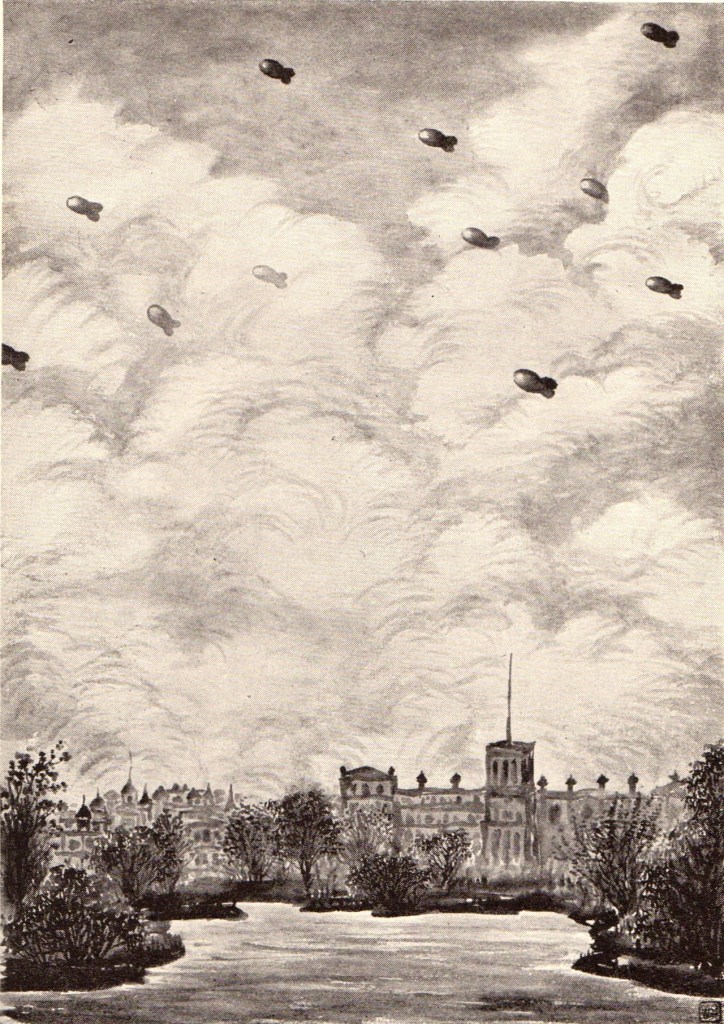
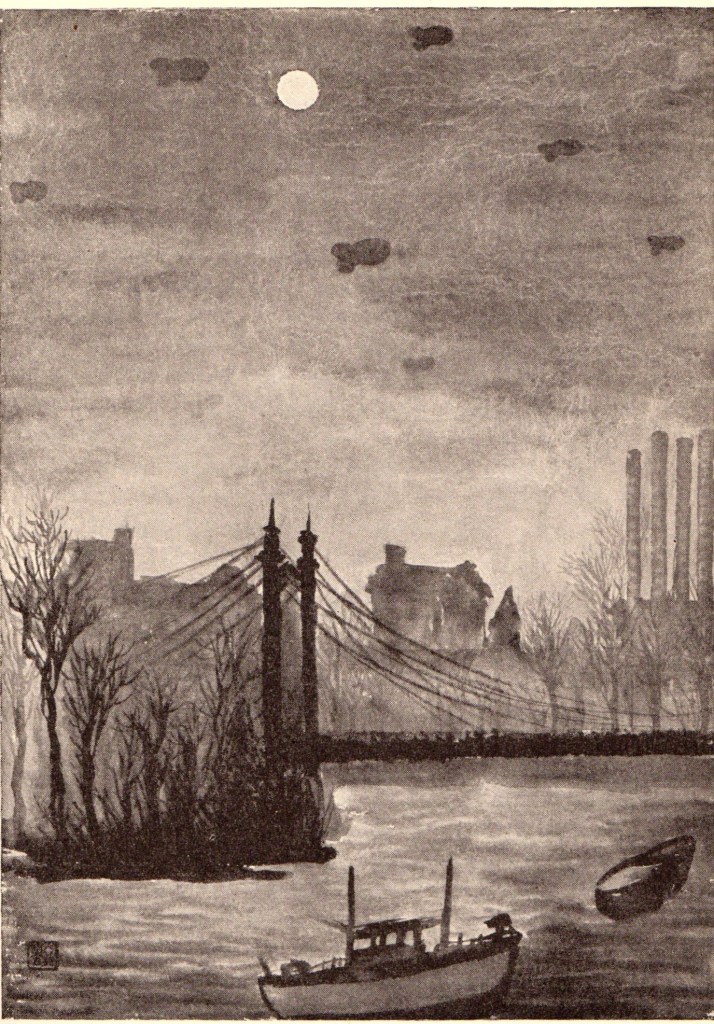
Night views of Trafalgar Square, Whitehall and the Thames at Chelsea
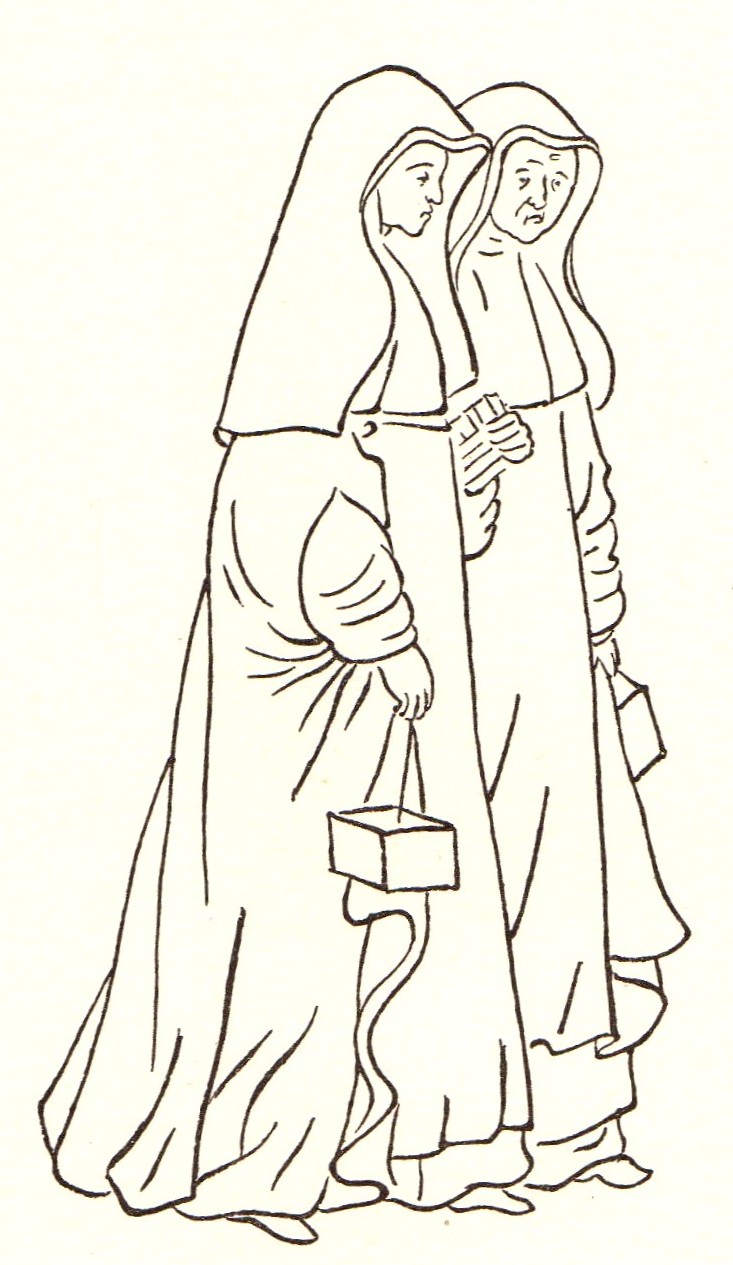
Chiang Yee also delights in telling us about the ubiquitous gas mask and shows its presence in Londoners’ lives from the man asleep in the park, resting his head on his gas mask’s box, shown on the dust jacket at the top of this page to a pair of nuns carrying their gas marks and the ever helpful and loyal London dogs, helping their mistresses to carry their gas masks at all times.
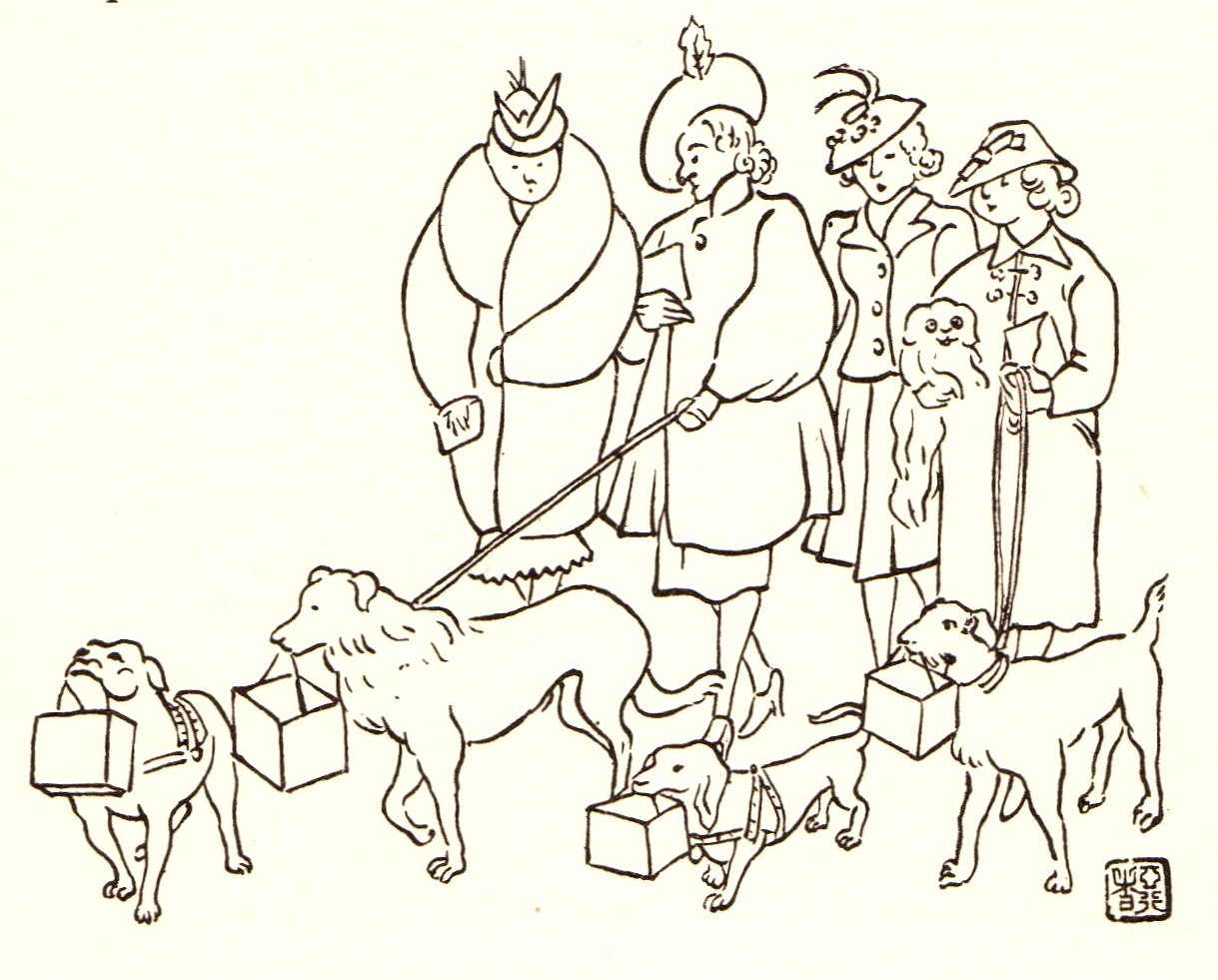
The book ends with this paragraph directly addressed to Chiang Yee’s brother Chiang Ta-Chuen.
“The war has just started and it is beyond my knowledge to guess how long it will last or what results it would have. But from all that I have told you above, I hope that you, my dear brother, will see how I stand in these unusual circumstances and how I have followed your constant instructions in living. I can find plenty of small joys to pass the time in spite of war, such as reciting poems during the black-out, leaning on sandbags to look at the movement of the tree leaves, and even making drawings on the cardboard box of my gas mask! So please do not worry about me, my dear brother. I hope you are keeping well.”
“With greatest affection, Your loving brother, YEE.”
Little did Chiang Yee know of the great disruption in his life that the war was about to cause. All will be revealed in his next book, The Silent Traveller in Oxford.
 Book Collecting World