The Silent Traveller in the Yorkshire Dales was the fourth of Chiang Yee’s Traveller books to be published, the first edition appearing on March 27th 1941. Unlike the form of the author’s earlier books, this one was a collection of recollections of several visits to the Yorkshire Dales in the late 1930s. Since the outbreak of the Second World War in September 1939, Chiang Yee’s life had changed dramatically. He was now an enemy alien and restricted by law in his ability to travel. In order to continue his series of travel books, he could now only write retrospectively, so he chose to write about his various trips to the Yorkshire Dales to stay with his friend Sir William Milner, who had a splendid house, Parecevall Hall, in Appletreewick, Wharfedale, seven miles north-east of Skipton, in the West Riding of Yorkshire.
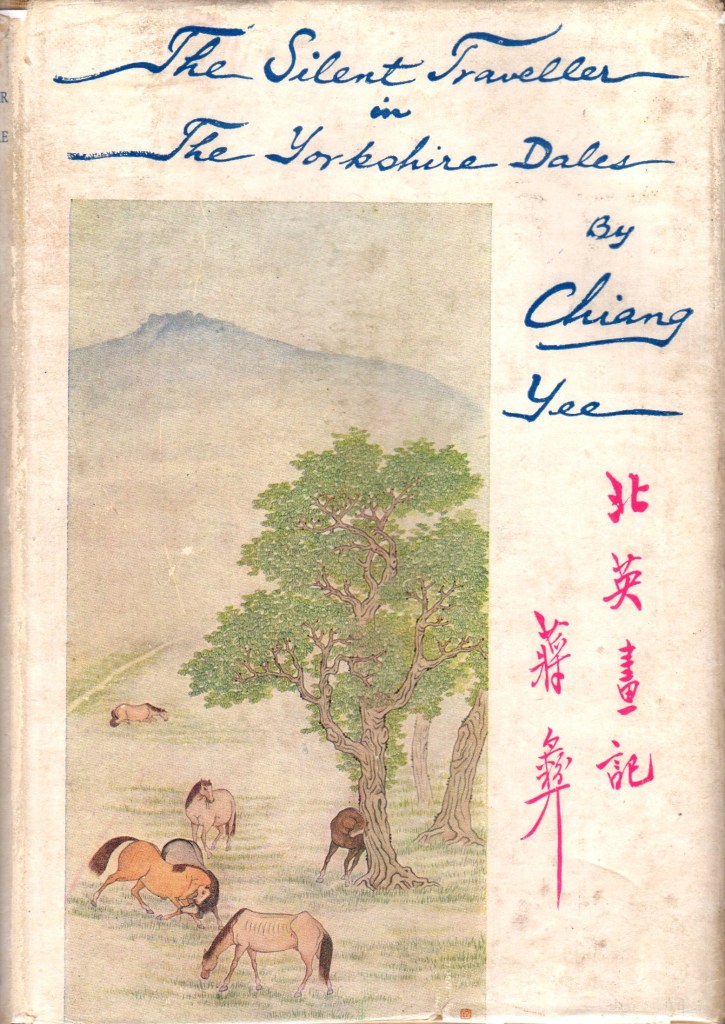
My sixth edition of The Silent Traveller in the Yorkshire Dales (1948)
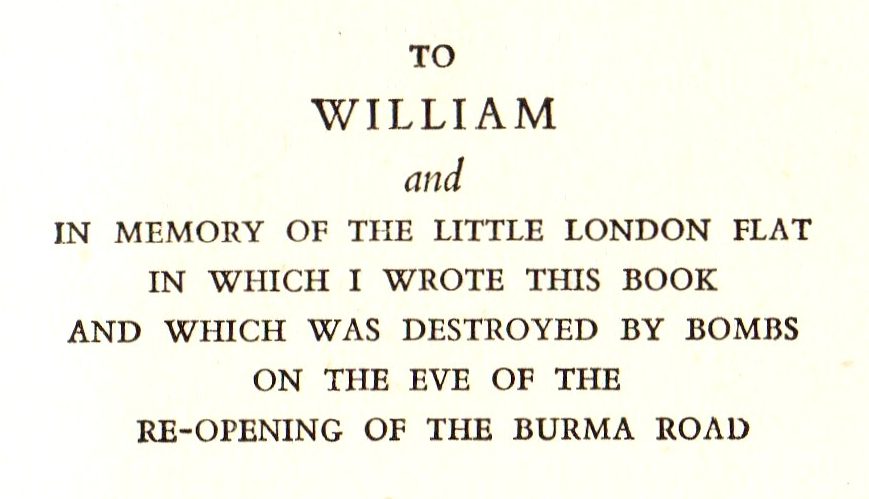
The book was clearly written in Chiang Yee’s flat in Hampstead in 1940, as the introduction is dated August 1940. However, we know that when the London Blitz began in September 1940, several buildings in Hampstead were hit, including the home of Chiang Yee. It was initially thought that he must have perished amongst the ruins of his flat, but by good fortune, he had been invited to visit Oxford that day and spent the night with a friend in Oxford, returning the next day to find his home in ruins.
He returned to Oxford shortly after this catastrophe, and took to door knocking to seek accommodation in Oxford. He eventually knocked on the door of 28 Southmoor Road in the Jericho district, where he was offered rooms by the Keane family. He lived there for the next 15 years, only departing in 1955 when he left the UK to move to the USA. Presumably, the draft of his book on the Yorkshire Dales was also absent from Hamstead on the night that his flat was destroyed!
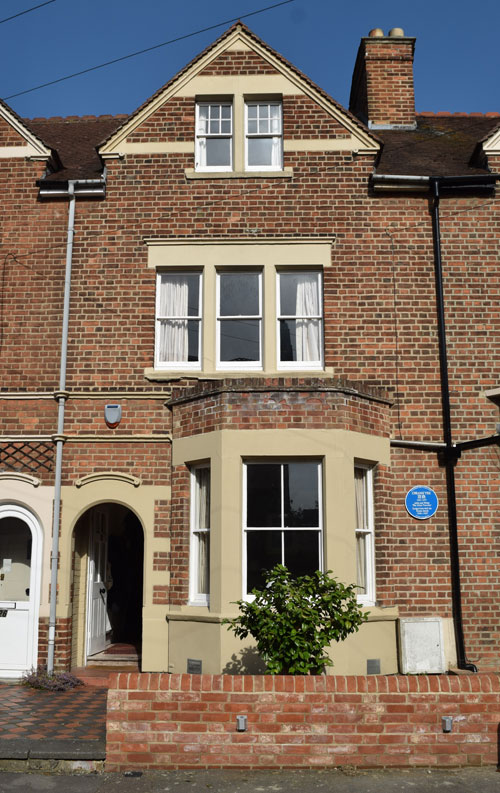
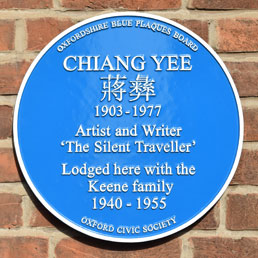
28 Southmoor Road Jericho with its Blue Plaque for Chiang Yee
In spite of the difficulties in publishing a book in wartime England, given both manpower shortages in the printing and publishing trades and the impact of paper rationing, the book was not only published in March 1941, but was republished in further wartime editions appearing in July 1941, April 1942, July 1942 and July 1944. Clearly, it was a popular and successful book. Presumably, at least part of the delay between the books introduction, which was written in August 1940 and its publication in March 1941 was due to the difficulties inherent in an enemy alien finding a new place to live in wartime England.
Sir William Milner and Parcevall Hall
Chiang Yee’s friend Sir William Milner (Sir William Frederick Victor Mordaunt Milner, 8th Baronet, 1893-1960), an architect by profession, was a keen traveller to China and had collected many Chinese plant specimens to plant in the UK. Sir William had purchased the ruins of Parcevall Hall in 1927, and renovated the house and planted its extensive gardens during the following decade. Sir William met and befriended Chiang Yee in London and invited his friend to visit him following Chiang Yee’s successful publication of his book on the Lakeland region. Chiang Yee would travel to Skipton in Yorkshire from Euston Station in London. Sir William would pick him up from Skipton Station and drive them both to Parcevall Hall, at Appletreewick in Wharfedale.
The Hall was bequeathed to the Anglican Church, following Sir William’s death, and now functions as an Anglican Retreat; the gardens are open to the public every summer and autumn.
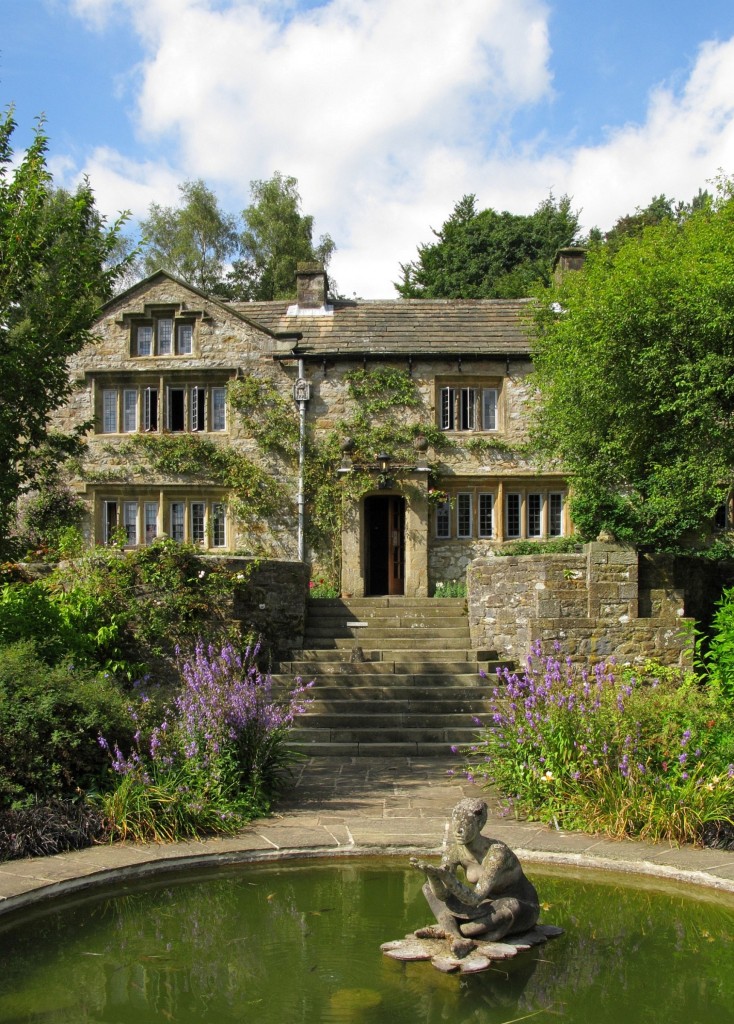
Parcevall Hall today
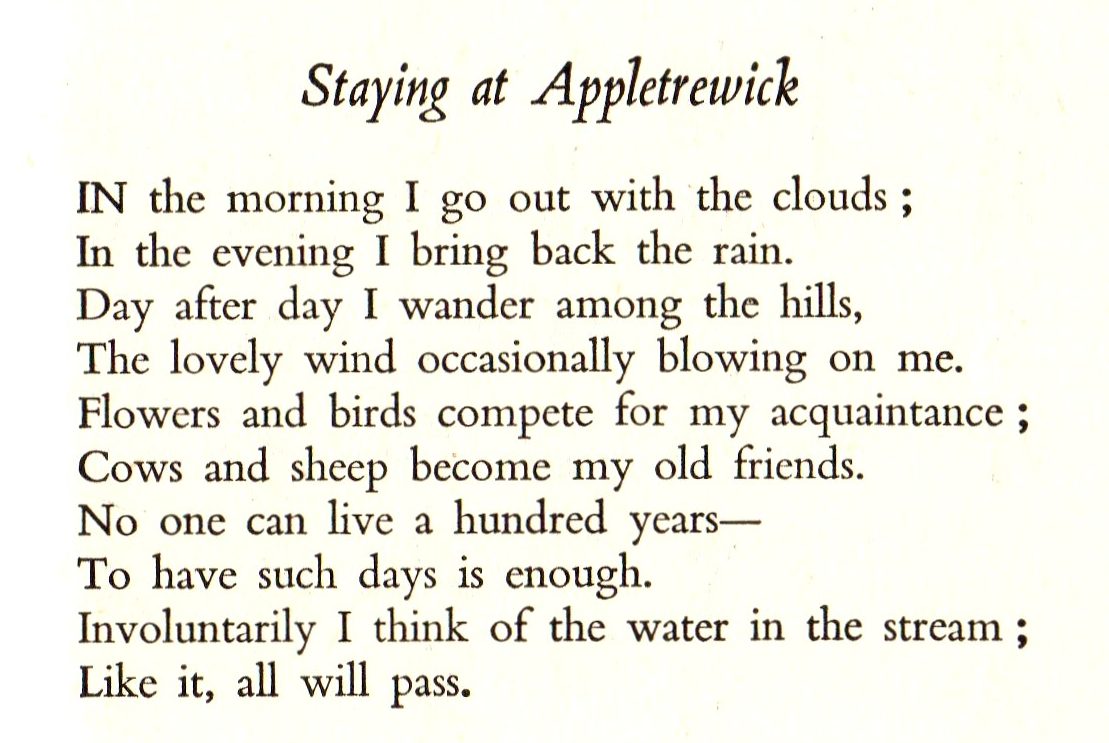
The Silent Traveller in the Yorkshire Dales consists of descriptions of about twelve walks that Chiang Yee describes in the hills and dales around the upper Wharfedale region, that he undertook in various seasons during his various visits to Parcevall Hall. He accompanies them with sketches, colour paintings and poems that enhance his descriptions of the scenery. He notices similarities with the Lakeland region and with various areas that he recalls in China, particularly those near his hometown region. This is a little poem that he wrote about his visits to the Appletreewick area.
Two of the waterfalls that were visited by Chiang Yee in Wharfedale.
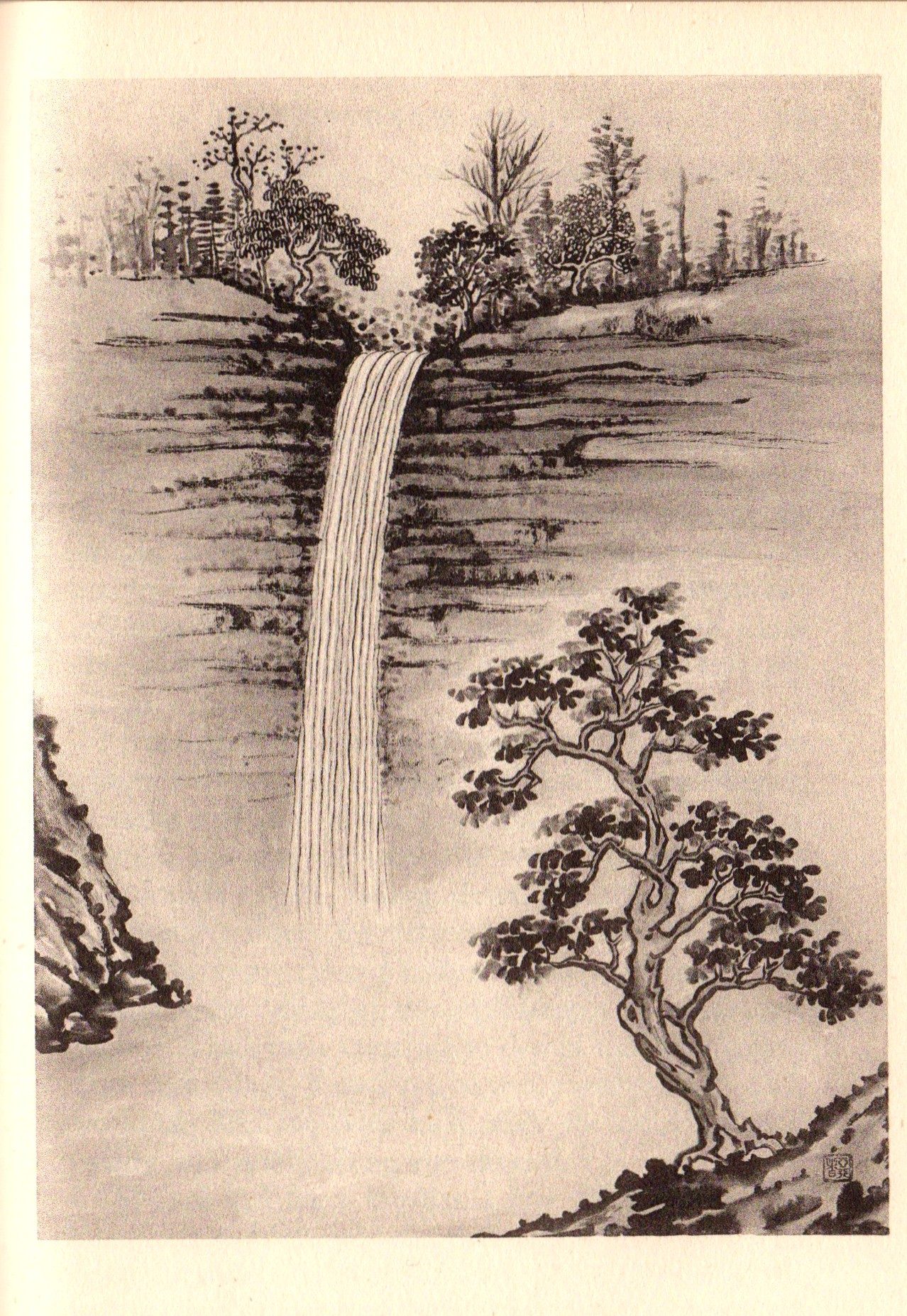
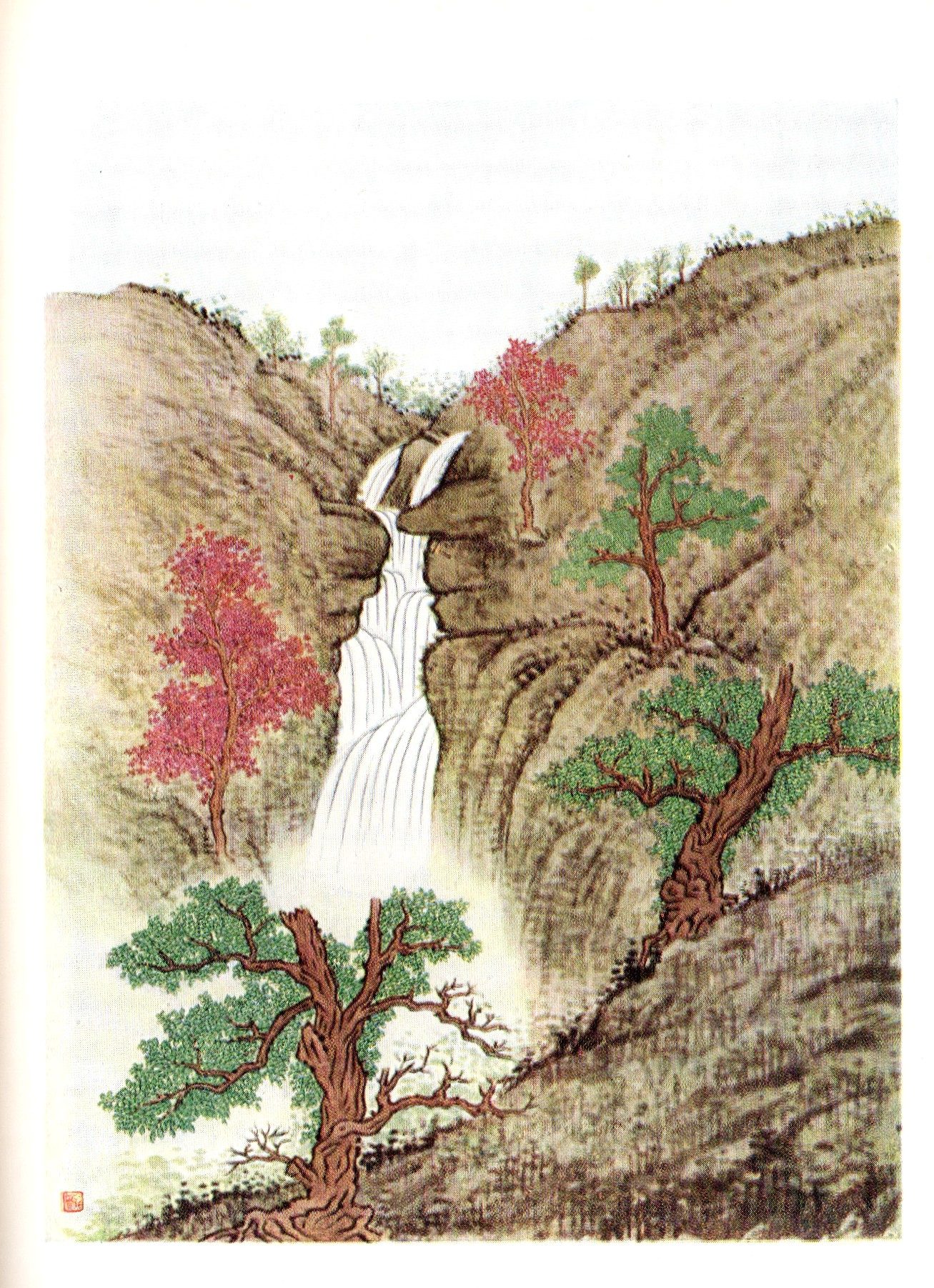
Left: Hardraw Force. Right: Valley of Desolation.
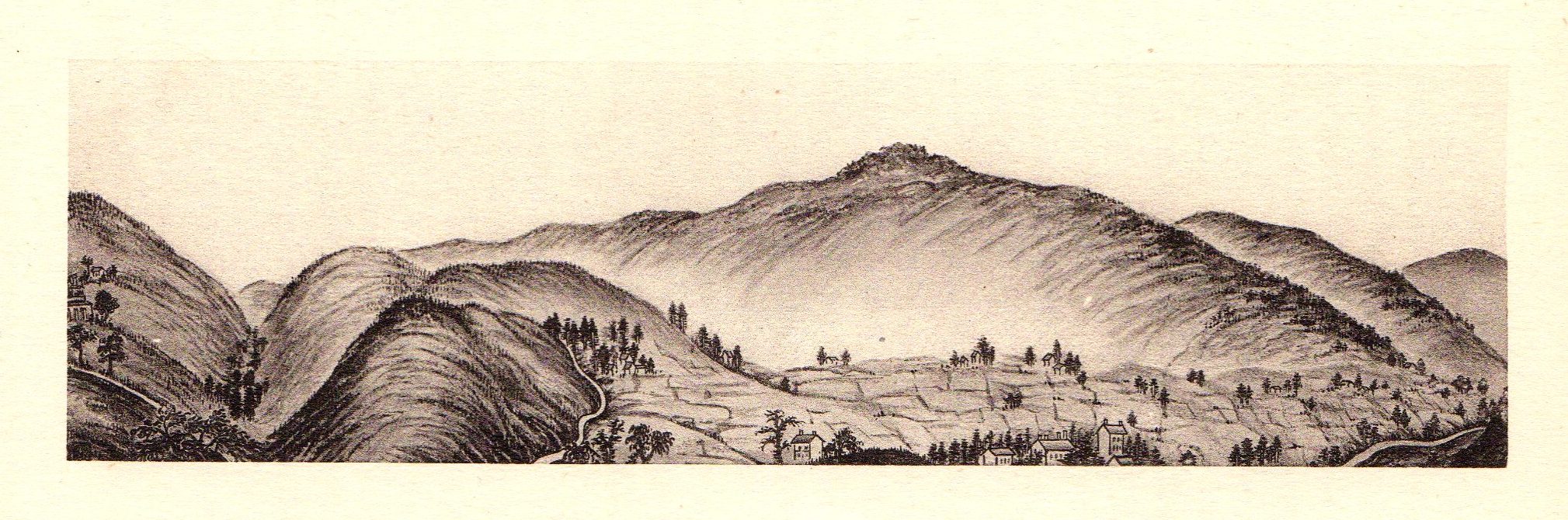
Simon’s Seat, viewed from Parcevall Hall
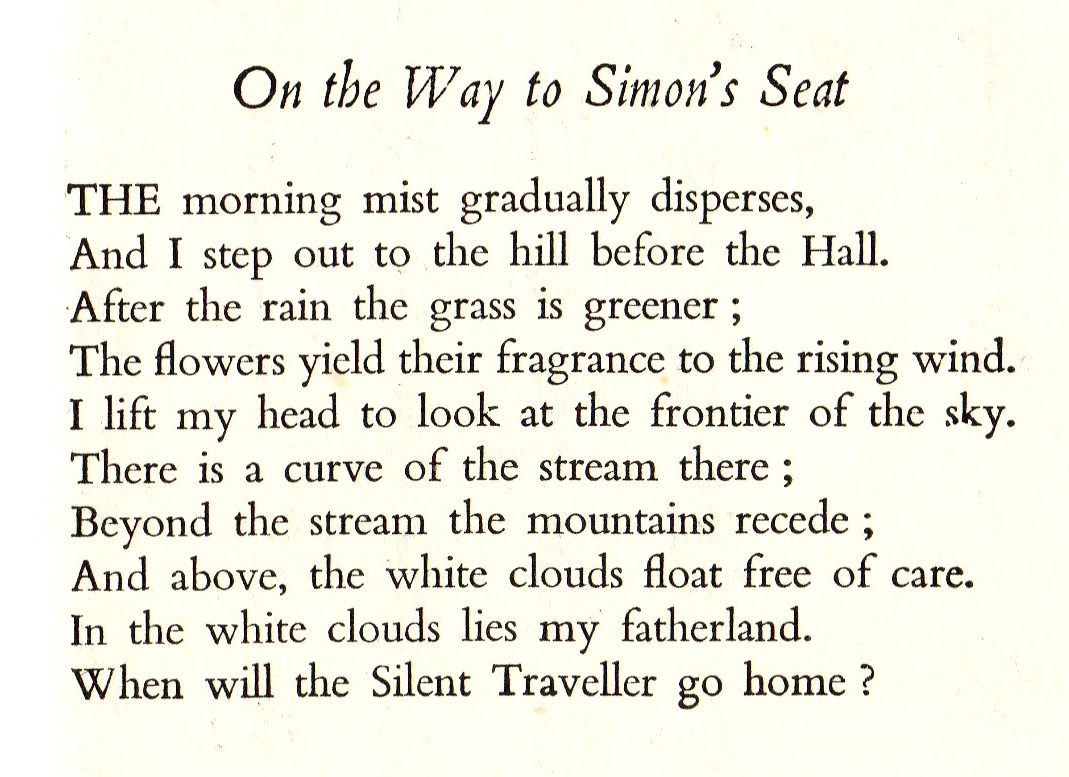
Chiang Yee describes his three attempts to climb Simon’s Seat, the most prominent hill close to Parcevall Hall. He manages to get himself lost on the first two attempts, but describes the scenery on all of his three walks and compares climbing the hill to Confucius climbing to the top of Tung Shan, from where Confucius declares that the whole Chinese empire was small; Chiang Yee declared that from the top of Simon’s Seat, “he did not think that Wharfedale is very big.” Here is Chiang Yee’s poem about climbing Simon’s Seat.
Chiang Yee described various birds and animals that he observed during his walks in the dales. He also produced three coloured paintings of groups of animals: Horses, Rabbits and Chickens.
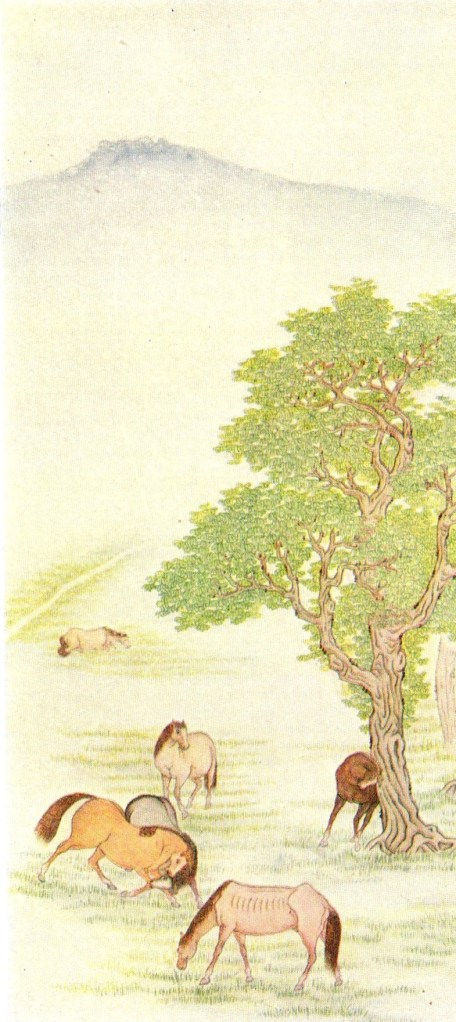
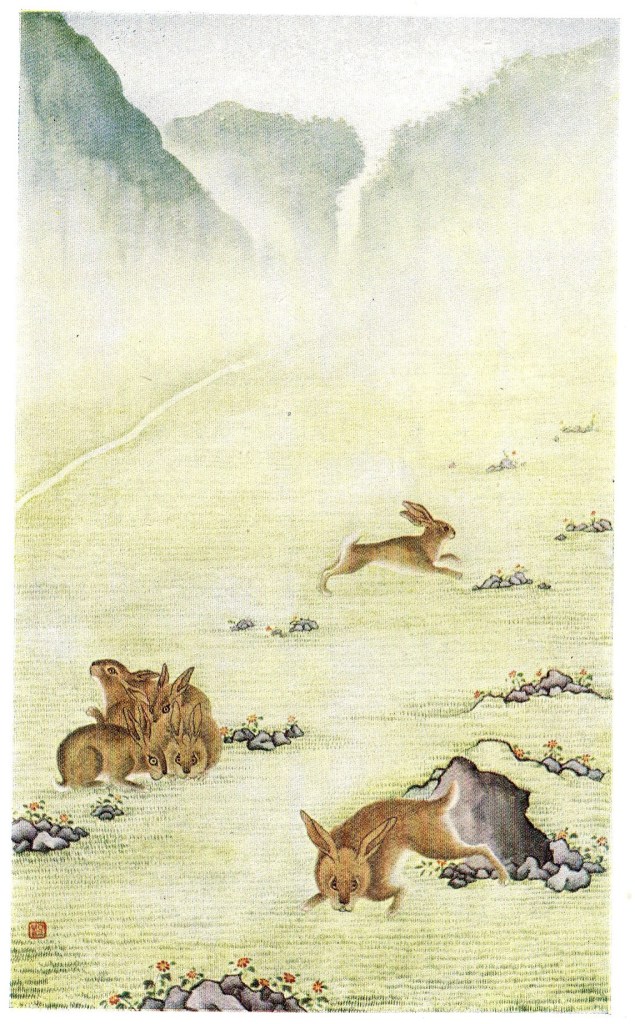
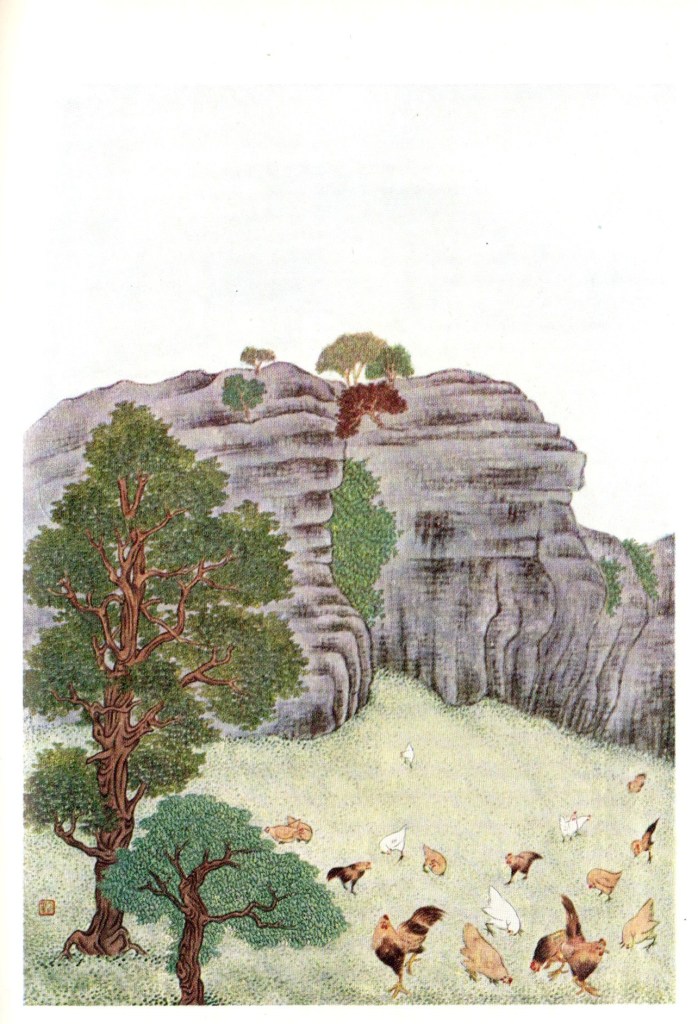
Horses at Barden Bridge: Rabbits in Toller’s Gill: Chickens at Kilnsey Crag
My final comment on this book is to show Chiang Yee’s dedication, which acknowledges Sir William Milner and laments the loss of his London Home. The next book in the series is the first one which I discovered and which celebrates his new home town; The Silent Traveller in Oxford.