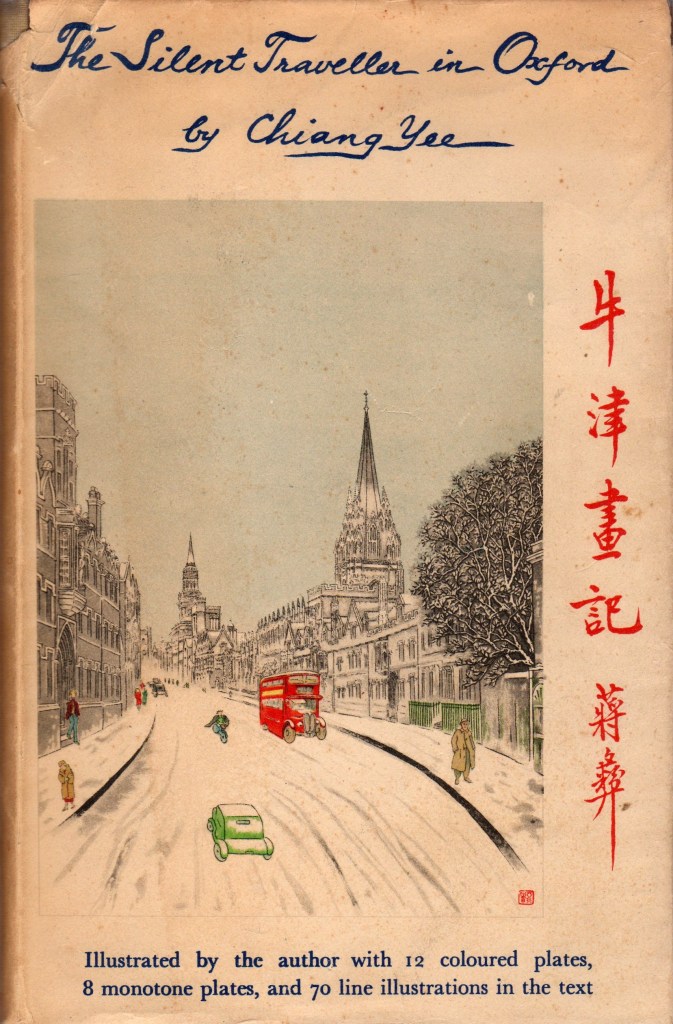
My 1948 reprint of “The Silent Traveller in Oxford” by Chiang Yee
My beginnings with The Silent Traveller
The Silent Traveller in Oxford was the first book by Chiang Yee that I discovered. I found it in 1971 or 1972 in the Oxfam shop in the Broad in Oxford, and brought it because I was fascinated by Chiang Yee’s illustrations of Oxford in what was such an unusual and unexpected style. I had started to collect books seriously in 1970, when I arrived at Oxford to pursue a post-graduate degree in medical science for the next four years. One of my initial areas of interest was books about or related to Oxford, so I was very pleased to find The Silent Traveller in Oxford. At this point, I knew nothing about Chiang Yee.
The book remained unnoticed by me after my initial reading in the early 1970s until 2020, when I rediscovered it during the COVID-19 lockdown period, while I was spending time reviewing my personal library. After rereading it, I started to research Chiang Yee online, which has led to me learning much about him and to my acquisition of copies of all of his books by 2023.
The Silent Traveller in Oxford was first published on November 2nd 1944, about three and a half years after the publication of Chiang Yee’s previous Silent Traveller book, The Silent Traveller in the Yorkshire Dales. Once again the book seems to have sold well as new editions appeared in April 1945, December 1946 and the 4th edition in 1948. In the period since The Silent Traveller in the Yorkshire Dales in 1941, Chiang Yee had also published two children’s books and his book on the war in China, The Men of the Burma Road.
By November 1944, he had been resident in Oxford for four years, following the destruction of his London flat in September 1940. However, his arrival in Oxford in late 1940 was by no means his first visit to Oxford, as he tells us in the Introduction to The Silent Traveller in Oxford, which is dated December 1942. His first visit had been for ten days in 1934 to visit friends in Oxford. He returned for a one day visit in 1937 to give a lecture on Chinese Art at Rhodes House.
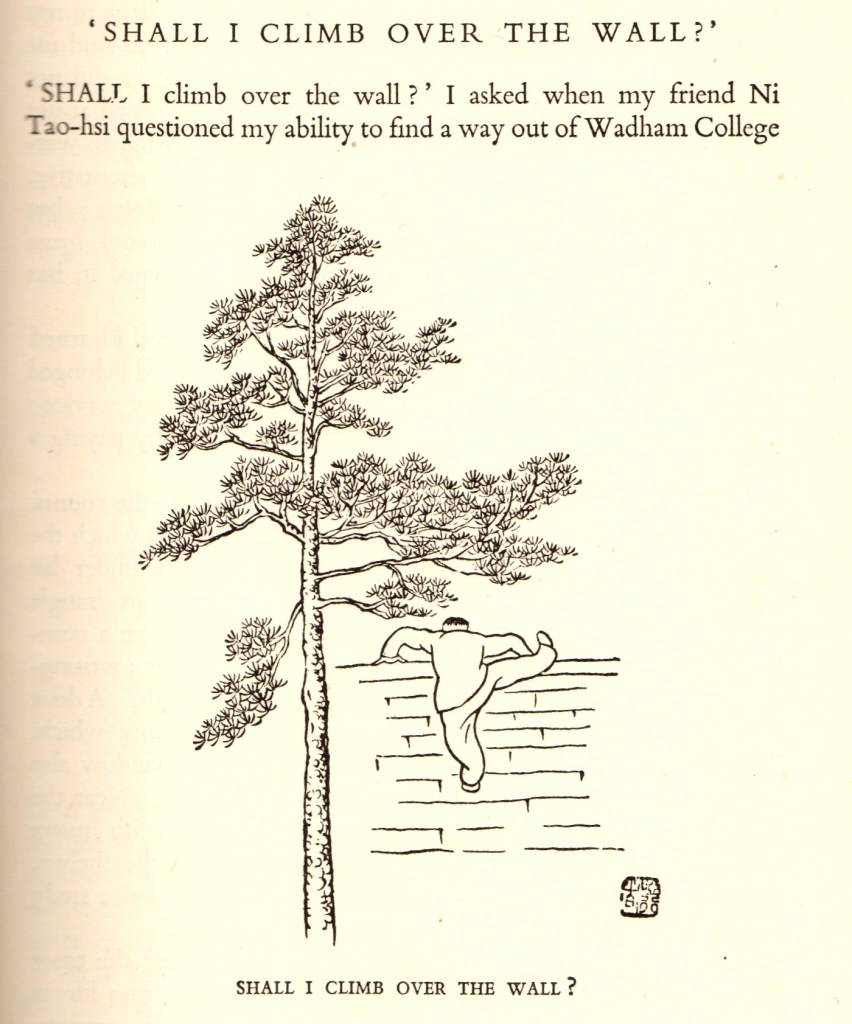
The book proper starts with his visit to his friend Ni Tao-hsi, a resident of Wadham College, in October 1940, following the loss of his London flat. He spends the evening with Tao-hsi and a group of his Oxford friends , and after losing track of the time, he spends the night sleeping on his friends couch in Wadham. He discusses attempting to leave Wadham after the gates had been locked by climbing the wall to get out, a nice inversion of the tradition of locked-out students climbing a wall to get back in. This is illustrated by an imagined sketch of his attempt to climb out.
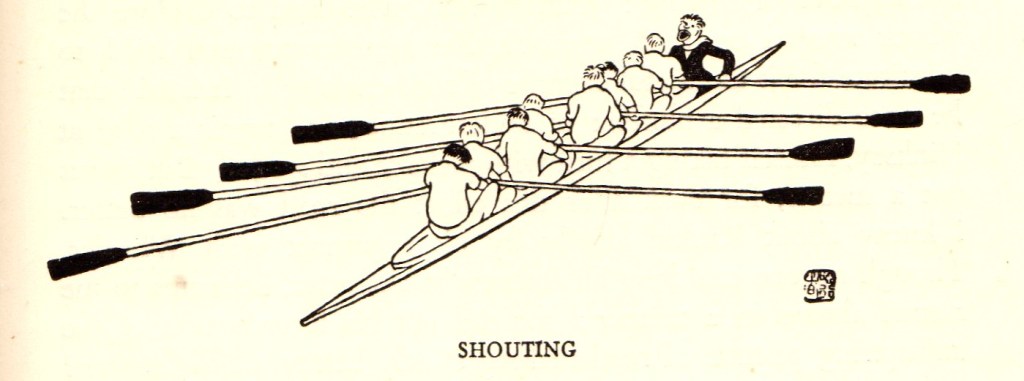
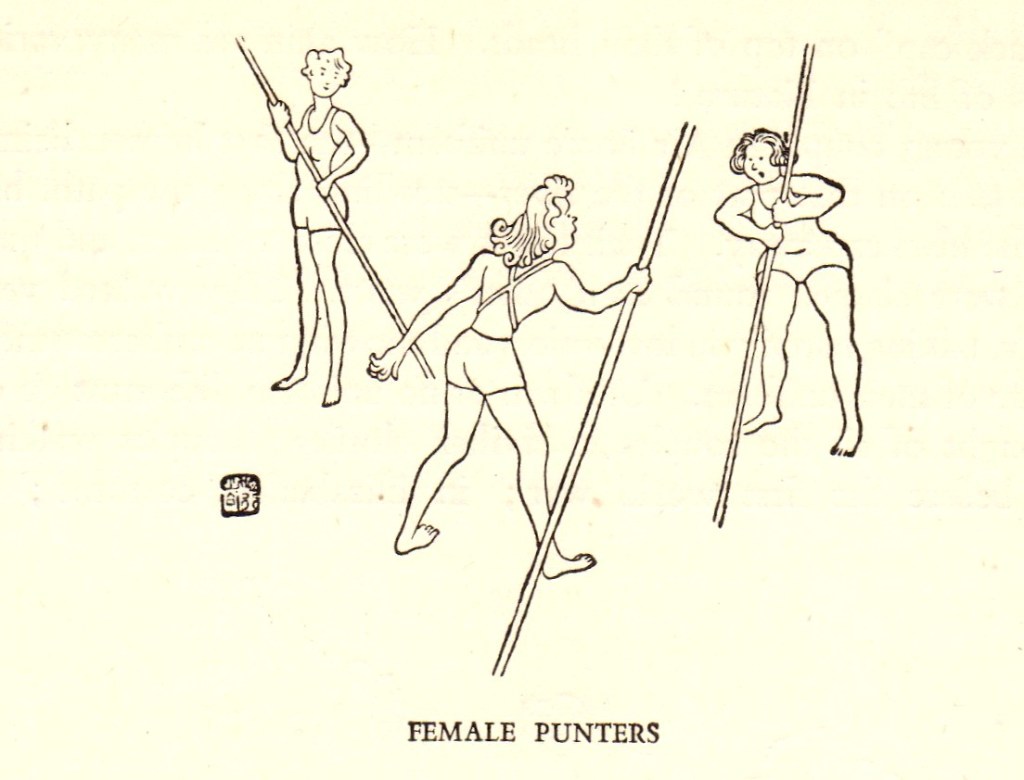
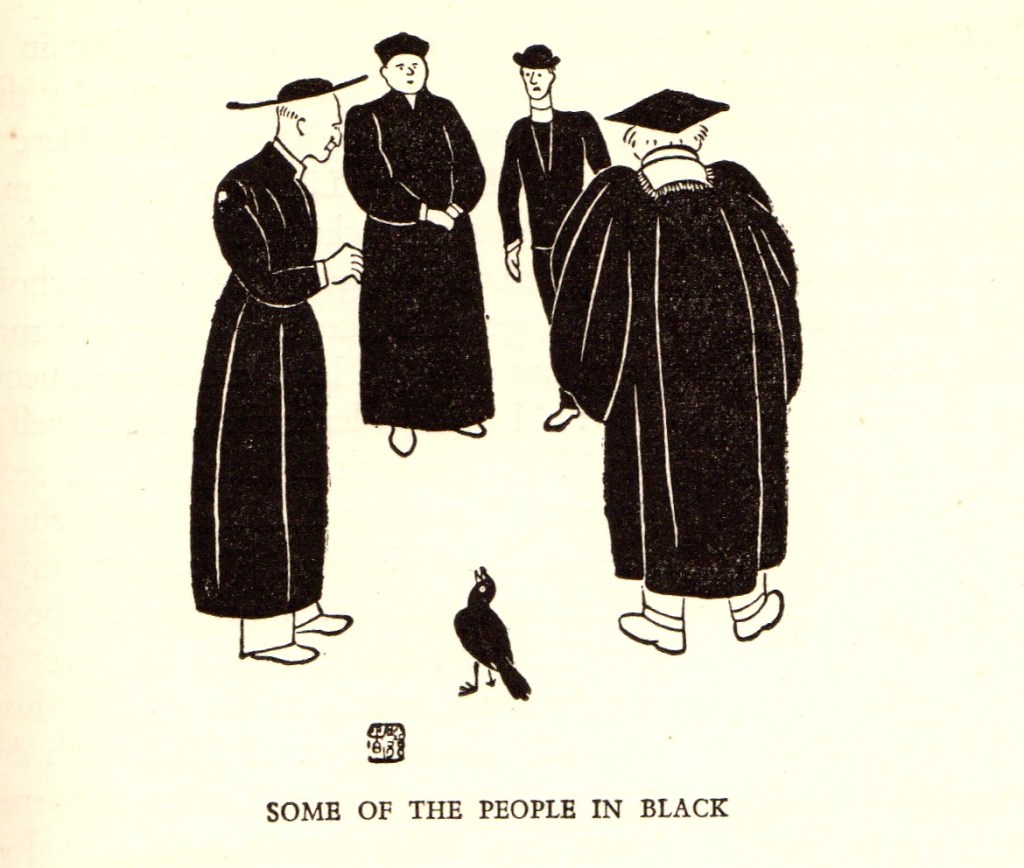
Most of the book is taken up with Chiang Yee’s life in Oxford, although he does mention visits to the Sadlers Wells ballet in London in November 1942, where he had been asked to design the costumes and decor for Ninette de Valois’ production of The Birds. As the introduction is dated December 1942 and there are no dates mentioned in the text from 1943 or 1944, I feel that the book is essentially “set” in 1941-1942. He describes people and places in Oxford that he encounters and silently observes many typical “Oxford” scenes and encounters. Rowing and shouting on the Isis, Girls punting and Men in Black in discussion all are captured in simple line drawings.
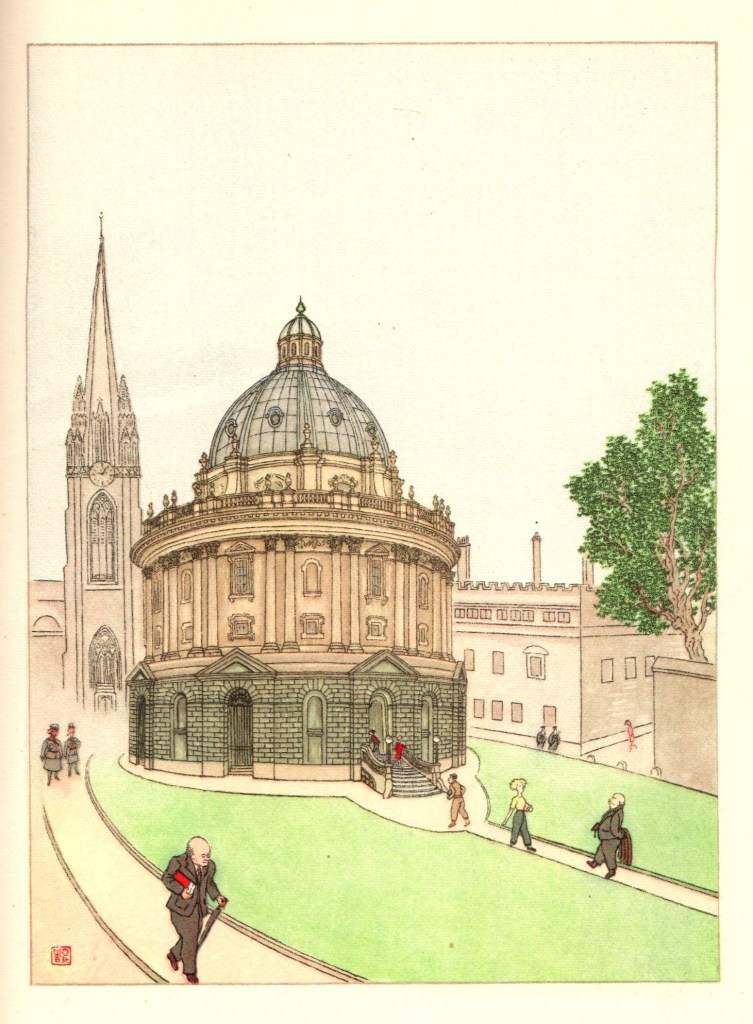
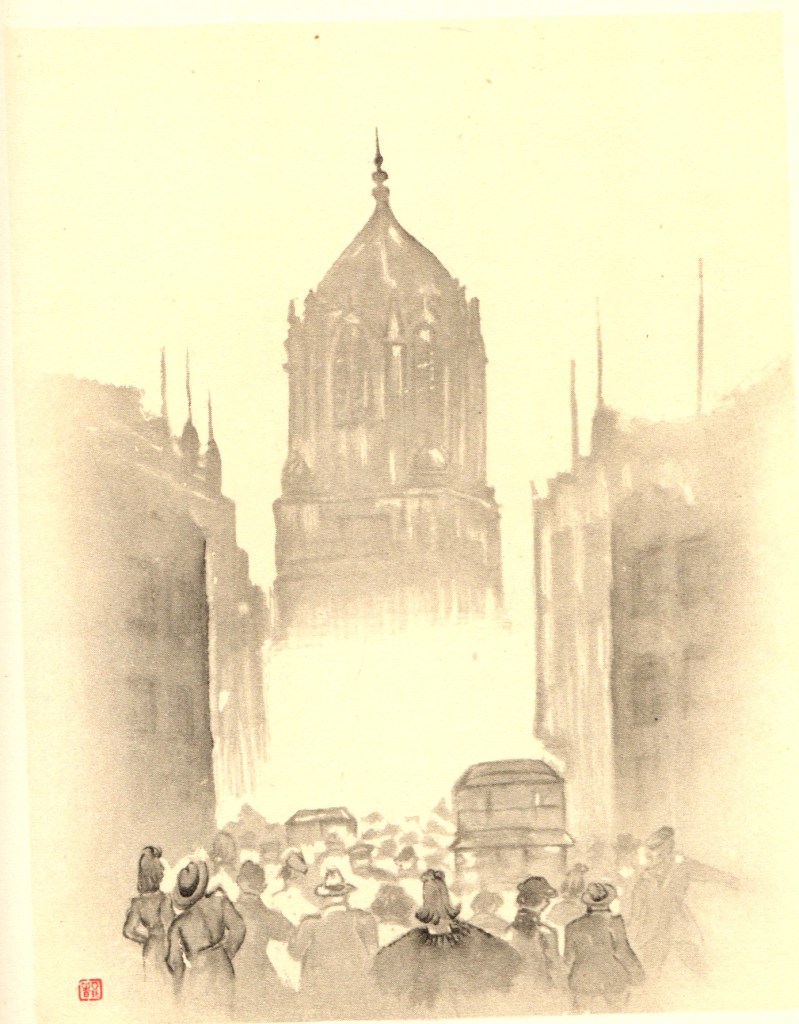
He also delights in the architecture and wildlife that he can illustrate in his traditional style. He gives us several wonderful paintings of classic Oxford scenes like The Radcliffe Camera, Tom Tower in the mist, and a wonderful painting of a red Oxford bus in the snow-covered High,
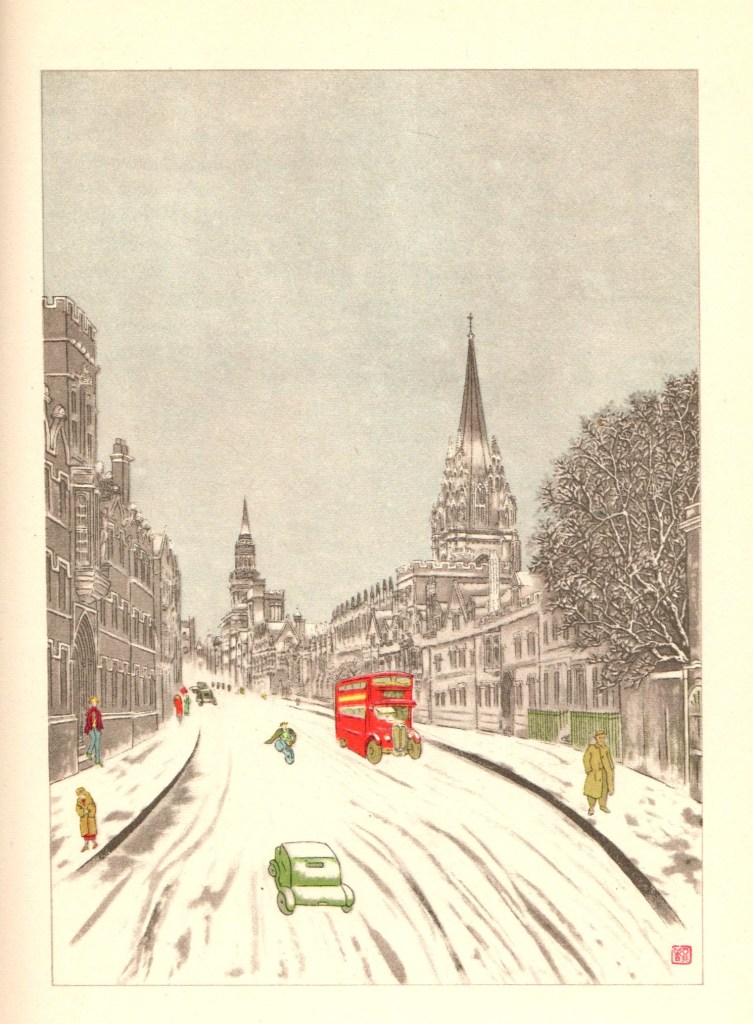
He visits the horses in Port Meadow during autumn, views the Dreaming Spires from a railway bridge in the spring and records a summer scene on the Cherwell, all beautifully depicted below.
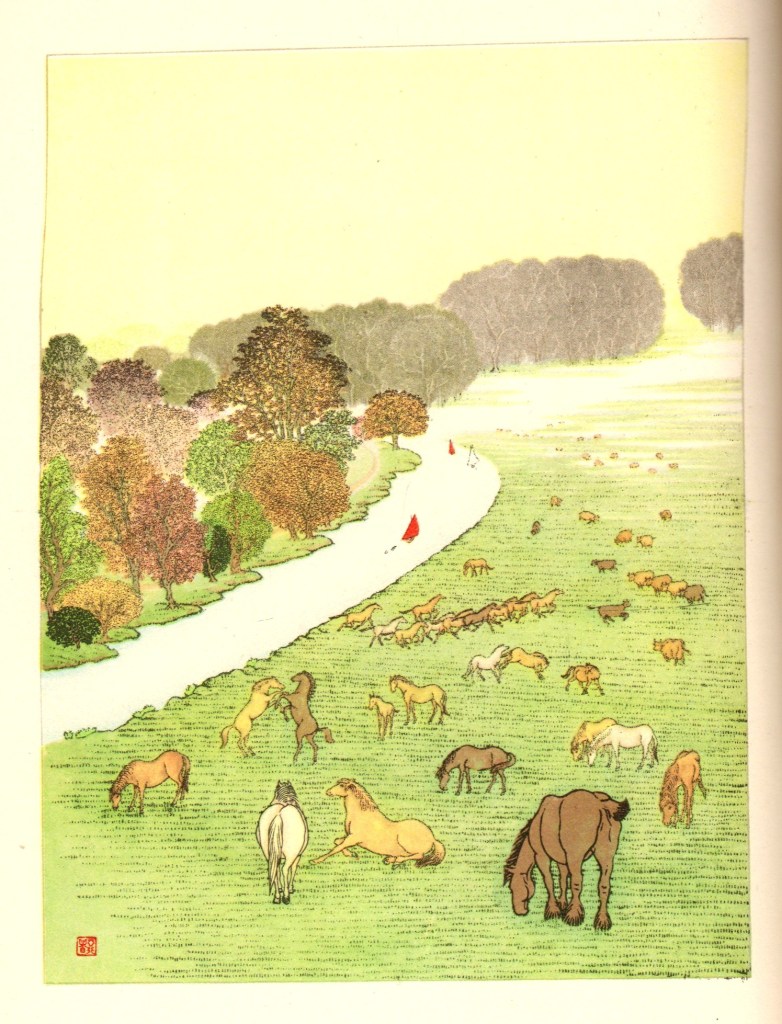
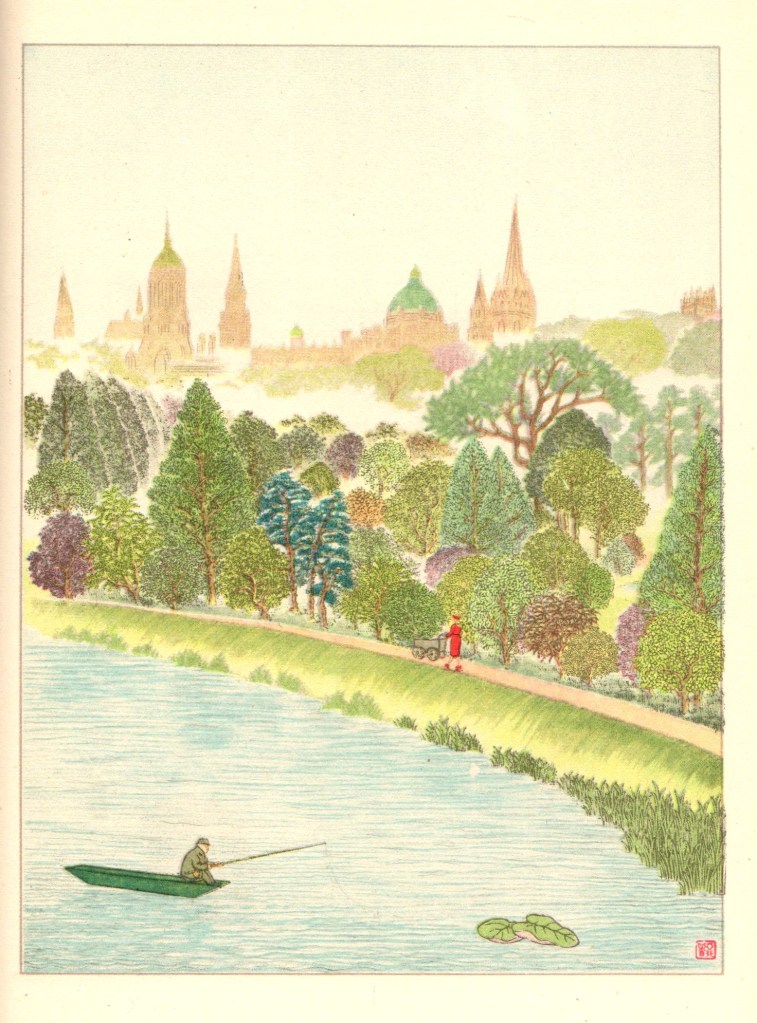
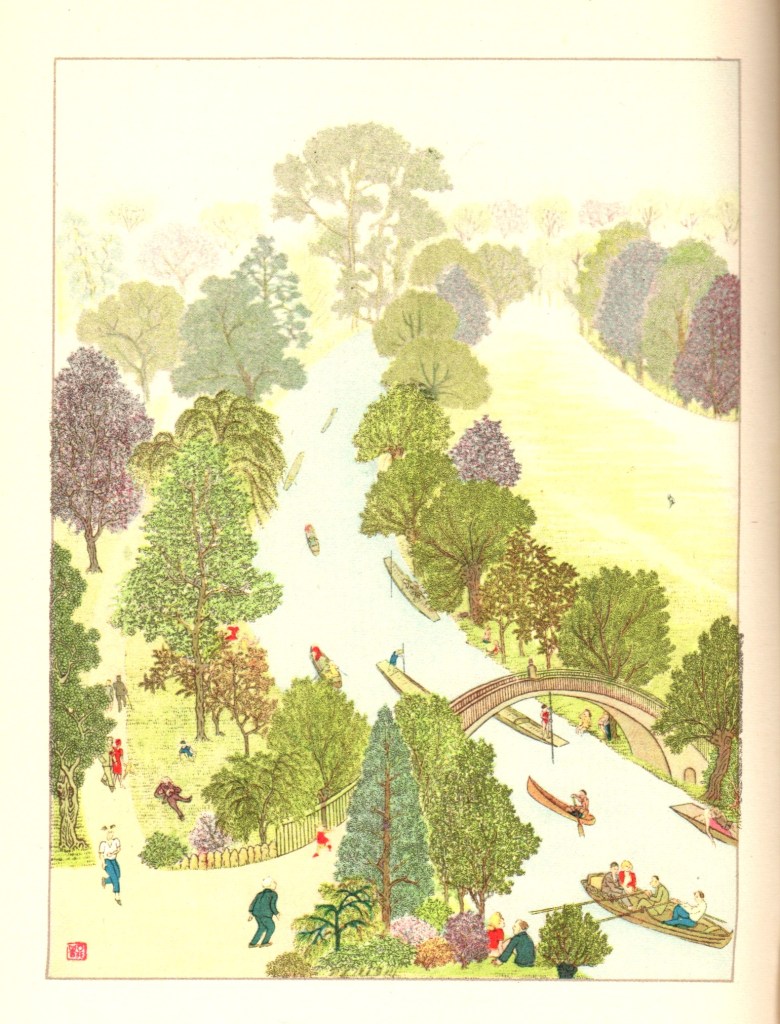
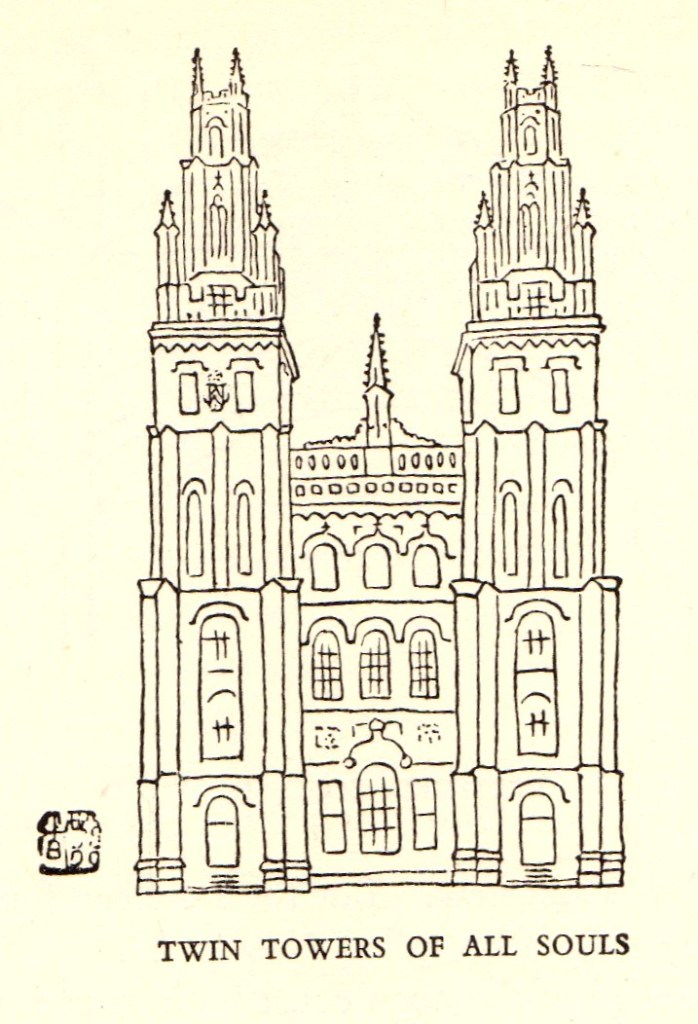
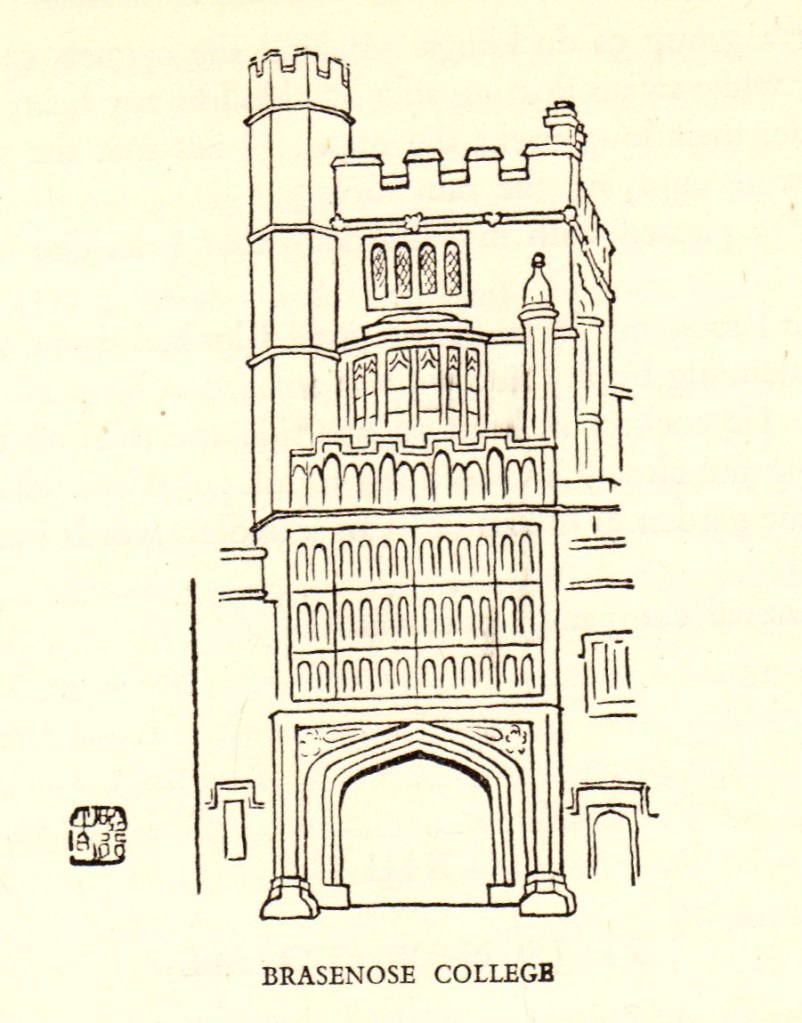
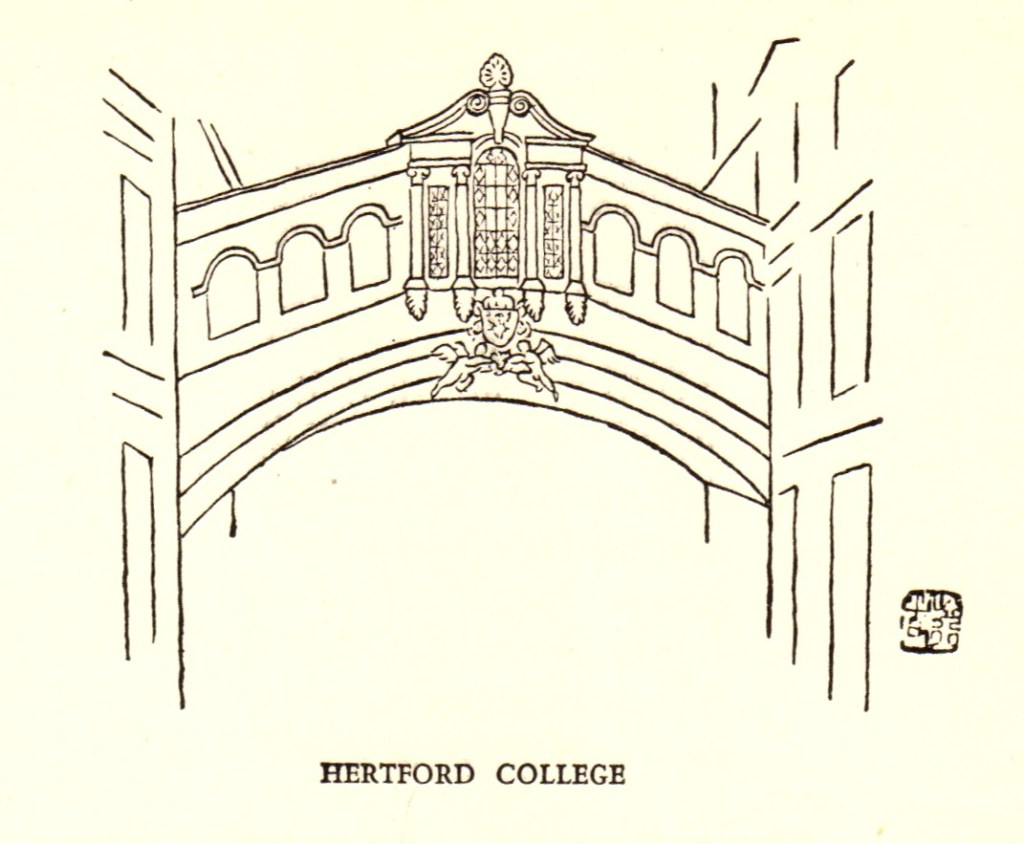
He admires the traditional architecture on view in many of the Oxford colleges, and provides fine drawings of several examples that have particularly inspired him. These included the Twin Towers of All Souls, the main entrance gate of Brasenose College and the “Bridge of Sighs” at Hertford College.
Chiang Yee also contributes several of his poems in traditional Chinese styles to enrich the text. In addition, he also gives us quotations from Shelley, inspired by a visit to the Shelley Memorial in University College Chapel. This visit also invokes memories of his friend Professor Shelley Wang, Wang Li-hsi, a well known Chinese poet who returned to China from London in 1938 in order to fight the Japanese invasion, and gave his life fighting for his country. Chiang Yee also quotes from Wordsworth in describing the English countryside, and adds his own “Wordsworth-inspired” poem on hearing a skylark on Youlbury Ground at Boar’s Hill, just south of Oxford.
All around me are the spring colours,
The wind is gentle and the rain has stopped.
This heart of mine is just like a child,
Going freely where it likes.
Suddenly I hear music in the air.
My footsteps halt, my spirit is enlivened.

Chiang Yee: Harmonious Madness on Youlbury Ground
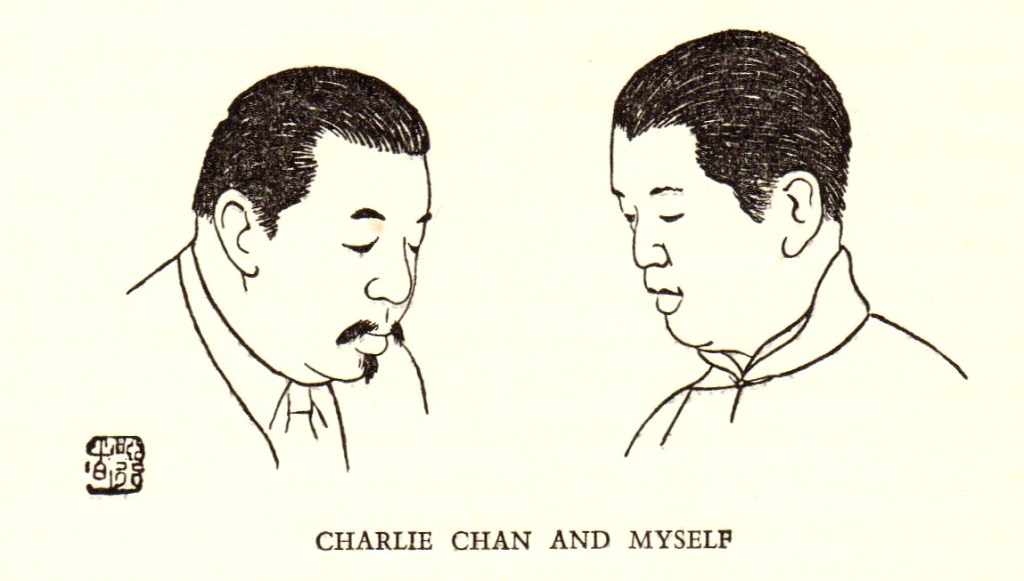
Chiang Yee also gives us a double portrait of himself and the film star Charlie Chan, after groups of children had chanted “Charlie Chan – Charlie Chan” at him on a bus, because of his Asiatic appearance. He tells the famous anecdote of Charlie Chan’s son referring to the “Honorable Pussy Cat”, and reminds the reader that Trinity College still does not allow Chinese people to visit the college. The irony of the comparison with Charlie Chan is that the character was portrayed by two Caucasian actors, a Swede called Warner Orland and an American called Sidney Toler.
Chiang Yee remained an Oxford resident for the rest of his time in the UK, remaining at 28 Southmoor Road, Jericho until his departure for New York in 1955.

